Skip to content

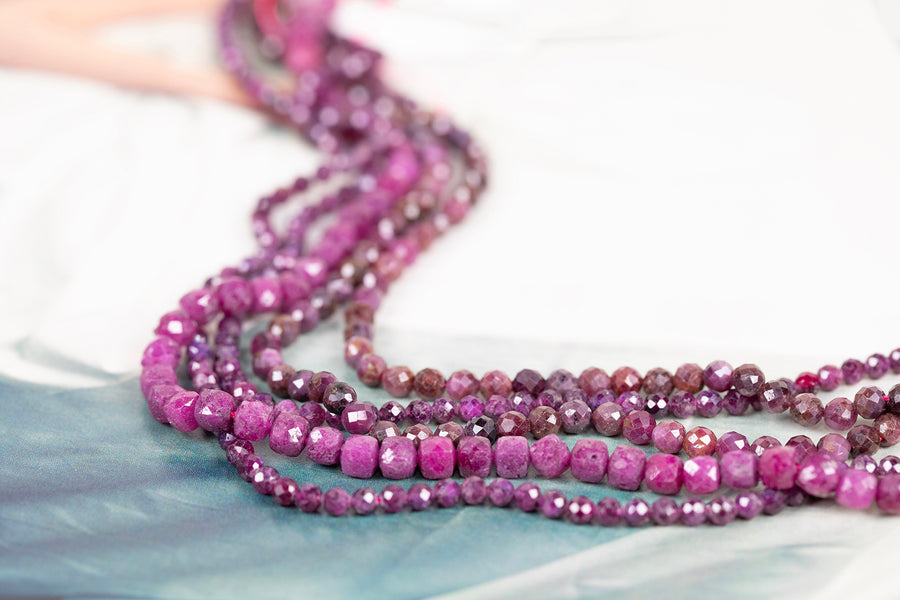
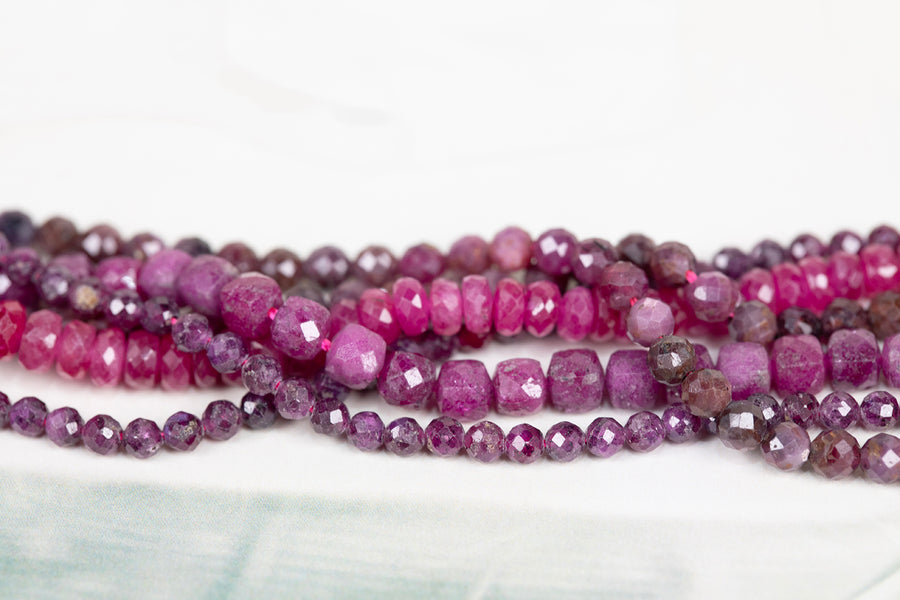
Ruby Zoisite 3x4mm Rondelle Faceted - 15-16 Inch

Original price $23.00 - Original price $23.00
Original price $23.00
$23.00
$23.00 - $23.00
Current price $23.00

Ruby Zoisite occurs naturally when small Ruby crystals become embedded within Zoisite. The Ruby inclusions in this stone are pink to reddish purple to dark purple, while the Zoisite is light to medium green. Ruby has long been considered one of the most beautiful and valuable gemstones on the planet. It is also one of the hardest, second only to Diamond. At times in ancient history, Ruby was valued more highly than any other gem, including Diamond. It’s believed that Kublai Khan once offered an entire city in trade for a sizable Ruby.

SKU RBZ4RL-F
Specifications

Stone type
Corundum
Cut
Faceted rondelle
Strand length
15-16 Inch
Drill style
Center-drilled (face to face — disc axis)
Treatment
Natural
Typical origin
Burma/MyanmarMozambiqueMadagascarThailandIndiaSri Lanka
Mohs hardness
9
Care
Extremely durable. Natural and heated ruby tolerate ultrasonic and steam cleaning; dyed strands take mild soap and warm water. Store apart from softer stones.
Mineral family
Corundum

Frequently asked questions

  • Is ruby usually treated?
    Nearly all ruby on the bead market is heated to improve color and clarity, a stable, industry-standard treatment that needs no special care. Unheated ruby exists and is less common in calibrated bead cuts. Every strand here states natural, heated or dyed in its title.
  • What's the difference between ruby, garnet, and red spinel as beads?
    Ruby is corundum (aluminum oxide) colored by chromium, Mohs 9. Red garnet is a silicate family (almandine, pyrope, rhodolite), Mohs 7–7.5, and typically shows a slightly browner or purplish-red. Red spinel is magnesium aluminate, Mohs 8, and was confused with ruby for centuries; many famous "rubies" in crown jewels are spinels. In bead form, ruby tends toward a pinkish to slightly purplish red with a red glow under UV light, while garnet runs darker and more saturated. The mineral name on the strand settles it.
  • Can I use ruby beads in rings and bracelets that take daily wear?
    Yes. At Mohs 9, ruby is second only to diamond in hardness and is one of the most wear-tolerant stones in the bead catalog. It handles ring, bracelet and cuff applications well, including pieces that see regular knocks. Natural and heated ruby tolerate ultrasonic and steam cleaning; dyed strands take mild soap and water.
  • How should I clean finished pieces with ruby beads?
    For natural or heated ruby, warm water with mild soap and a soft brush is enough, and ultrasonic or steam cleaning is safe for the stone itself, though stringing materials (silk, nylon, leather) will not tolerate ultrasonic. Dyed strands get mild soap and water only. Pat dry and store apart from softer beads so the hardness of ruby does not scratch them.
  • What scale of ruby bead works best for which projects?
    Ruby is most commonly stocked in small calibrated rounds, faceted rounds, microfaceted rounds, and rondelles — typically 2mm to 8mm. The small sizes (2–4mm) work well as accent spacers, in multi-strand designs, and paired with diamond or gold findings where ruby reads as a precise color note rather than the main event. 6–8mm rounds and rondelles carry as a feature bead in earrings, pendants, and shorter necklaces. Faceted cuts pick up more light and read brighter; smooth rounds read deeper and more saturated.