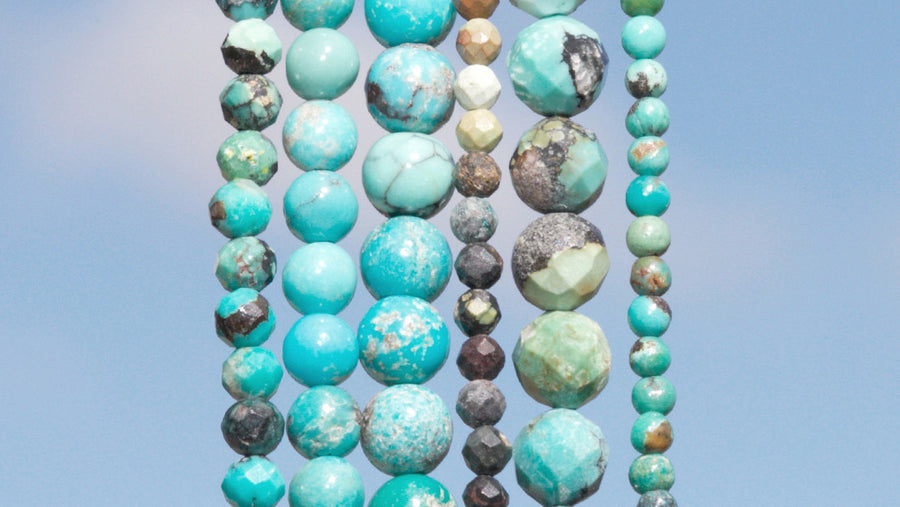
Hubei Turquoise 8x13mm Blue with Spider Web Matrix Tube Bead - 15-16 Inch
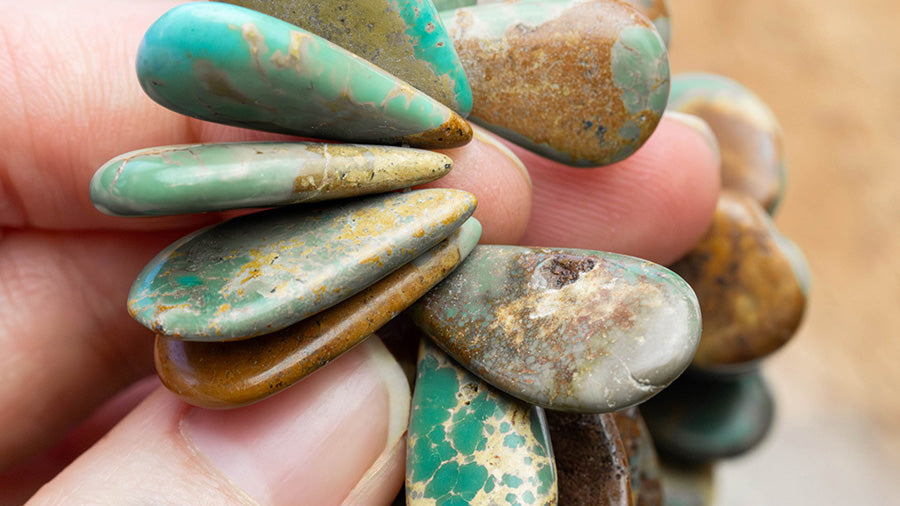
Hubei Turquoise is sourced from Hubei Province in Northern China, one of the most recognized turquoise-producing regions in the world. This material is known for its vivid blues, rich greens, and bold black spiderweb matrix—creating highly distinctive, one-of-a-kind beads.
This collection features material sourced from the Joo-shahn County mines, including the Chin-goo 808 Mine, known for producing turquoise with strong color contrast and dramatic natural patterning. Each strand reflects the unique mineral composition of the region, where copper contributes to blue tones and iron introduces green variations.
Turquoise is one of the oldest known gemstones, used by ancient cultures including the Egyptians and Aztecs for adornment and ceremonial purposes. It forms over long periods as mineral-rich water moves through aluminous rock, depositing copper and other elements that gradually develop into turquoise. Due to its natural porosity, most turquoise is stabilized to improve durability and usability in jewelry design—learn more about turquoise treatments and care.
Due to its natural porosity, most turquoise on the market is stabilized to improve durability, making it suitable for jewelry design while maintaining its natural appearance.
Each strand is unique, with natural variations in color, matrix, and pattern. No two are exactly alike.
Specifications
Frequently asked questions
-
Is Peruvian pink opal the same as precious opal?
No. Pink opal from Peru is a common opal — a hydrated amorphous silica (SiO2·nH2O) that displays a soft, uniform pink body color without the play-of-color (flash, fire) associated with precious opal. The pink hue typically comes from trace palygorskite or organic compounds rather than internal silica microstructure. Common opal is opaque to translucent and reads as a solid color, which is why it strings well for designers wanting a calm, matte-to-glossy pink without the visual movement of black or white precious opal. Mineralogically it's still genuine opal, just the non-iridescent variety the Andes are known for. -
How should I care for pink opal in finished jewelry?
Opal is hydrated silica and holds structural water, so the main risks are heat, dryness, and impact. At Mohs 5.5–6.5 pink opal is softer than quartz and can scratch against harder stones in a bead box or on the wrist. Avoid ultrasonic cleaners, steam, prolonged sun, hot cars, and low-humidity environments that can encourage crazing (fine surface cracks). Clean with mild soap and a soft cloth — no solvents, no jewelry dips. It suits earrings, necklaces, and occasional-wear bracelets better than daily-wear rings, where abrasion and knocks accumulate quickly. -
What treatments are typical for pink opal beads?
Peruvian pink opal is most often sold untreated — the pink color is natural to the material. Some strands may be lightly waxed or oiled at the polishing stage, which is standard for porous stones and not considered a color treatment. Dyeing is uncommon for this variety because the natural pink is already marketable, but very pale rough is occasionally enhanced. Treatment status should appear on the individual listing — ask before buying if it isn't specified, particularly if you're matching strands across reorders where natural color variation between batches is normal. -
What projects does pink opal work best in?
The soft, opaque pink and matte-leaning polish make pink opal a natural fit for romantic, bridal, and pastel palettes. It pairs cleanly with sterling and rose gold, and sits well next to moonstone, rose quartz, pearl, labradorite, and rutilated quartz without competing visually. Smaller rounds (4–6mm) suit delicate layering necklaces, wrap bracelets, and earring drops; 8–10mm rounds anchor statement strands and mala-style designs. Chips and pebble cuts work for textural multi-strand bracelets. Because the color is muted rather than saturated, pink opal reads as sophisticated rather than candy-pink — useful when you want pink that isn't juvenile. -
How do I tell pink opal from dyed howlite or pink magnesite?
Dyed howlite and magnesite are the most common imitators in the bead trade. Pink opal shows a slightly waxy-to-vitreous luster and a uniform body color that runs through the bead, occasionally with subtle white or gray matrix veining native to Andean material. Dyed howlite usually displays the characteristic gray spiderweb veining of natural howlite with color concentrated near the surface and along the drill hole. Pink magnesite tends to show a chalkier, more porous surface. Pink opal is also denser in hand and slightly harder (5.5–6.5 vs howlite's 3.5). When in doubt, the drill hole is the tell — dye pooling there is a giveaway.