Skip to content

Madre de Cacao 8mm Round - 15-16 Inch

Original price $9.00 - Original price $9.00
Original price $9.00
$9.00
$9.00 - $9.00
Current price $9.00
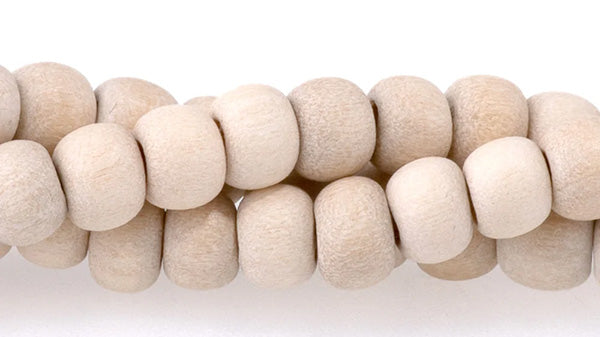
Madre de Cacao is a very hard tropical wood with a visible grain. This species is formally identified as Gliricidia sepium and can be found by different colloquial names in various parts of the world. Other names include: quickstick, mata ratón; cacao de nance, cachanance; piñon Cubano, madreado. kakawate, madre xacao or madre de cacao, and madero negro.

Like all of Dakota Stones items, our wood beads are top quality and sourced from the best ethically produced manufacturers. Natural wood beads have markings and color unique to their species. All wood beads on DakotaStones.com originate in the Philippines or Indonesia, and are indigenous to those countries. Our beads have not been dyed, treated, or color-enhanced.

  • Approx. Strand Length: 16 Inches
  • Approx. Beads Per Strand: 50 
  • Approx. Hole Diameter: 0.8 - 1.1mm
SKU WD-MAC8RD
Product Specifications

Stone type
Organic wood
Cut
Round
Bead size
8mm
Strand length
15-16 Inch
Approx. beads / strand
45
Drill style
Center-drilled
Hole size
0.8-1.1mm
Mohs hardness
2–3
Mineral family
Organic wood
Treatment
Natural
Typical origin
PhilippinesIndonesia
Care
Soft organic material (Mohs 2–3). Avoid ultrasonic, prolonged water, harsh chemicals; soft dry cloth, occasional natural oil to maintain luster.
The grain is the pattern

The grain is the pattern

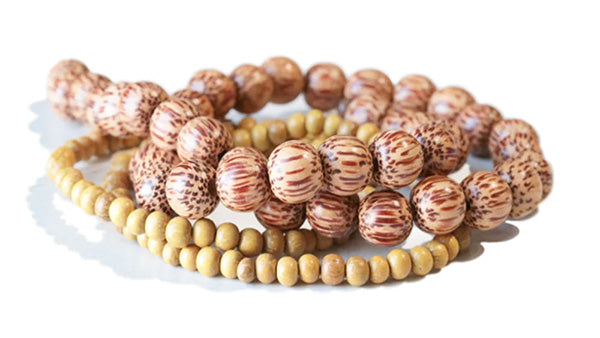
Each species carries its own color straight from the tree — whitewood a pale cream, graywood a soft ash-gray, rosewood a low blush, bayong the red-brown of mahogany, and kamagong, the Philippine ebony, deep brown to near black with a tiger stripe in some cuts. The finish is natural, so the figure of the wood does the surface work — growth lines, fine flecks, the brushed parallel marks of patikan palm. A strand matches in tone and still reads as individual beads, which is the signature of the material.
Light in the hand

Light in the hand

Wood weighs a fraction of stone at the same size, and that changes what a design can afford — a 10mm round works in an earring, a triple strand stays comfortable, an all-wood mala wears light through the day. The color runs with the age of the tree: dark bahi palm comes from adult trees, the lighter runs from young growth. A few rounds carry inlaid abalone, a ring of iridescent shell set flush into the face of the bead.

Frequently asked questions

  • Is wood considered a gemstone, and how should I describe it to customers?
    Wood beads aren't a mineral — they're an organic material made of cellulose and lignin, cut and polished from various tropical hardwoods (typically sourced through the Philippines and Indonesia for the bead trade). They sit alongside other organics like horn, bone, and shell in the jewelry world. In customer-facing copy, calling them "wood beads" or naming the specific wood (when known) is standard. Don't confuse them with petrified wood, which is a true gemstone — fossilized wood replaced by silica, mineralogically a chalcedony with Mohs around 6.5–7.
  • How durable are wood beads compared to stone?
    Wood is soft — roughly Mohs 2–3 — and far less durable than most gemstones. It scratches, dents, and absorbs moisture. For finished jewelry, wood works best in earrings, necklaces, and occasional-wear bracelets where the beads aren't constantly rubbing hard surfaces. Avoid rings and daily-wear bracelets unless the design protects the beads. Wood is also lightweight, which is a real advantage for long necklaces, malas, and statement earrings where a comparable stone strand would feel heavy on the ear or neck.
  • How do I care for finished wood-bead jewelry?
    Keep wood beads dry. Don't soak them, don't run them through an ultrasonic, and don't expose them to harsh cleaners, perfumes, or hand sanitizer — solvents strip the finish and moisture can swell or crack the wood. Wipe with a soft dry cloth. If the surface starts looking dull after months of wear, a light pass of natural oil (jojoba, walnut, or a furniture-grade wood oil) restores the luster. Store away from direct sunlight and heat, which can fade dyed pieces and dry out the wood.
  • What does wood pair well with in mixed-material designs?
    Wood is a workhorse for earthy, bohemian, and mala-style designs. It pairs naturally with matte stones (matte onyx, lava, jasper), warm-tone stones (carnelian, tiger eye, sunstone), and other organics (bone, horn, coconut, seed beads). The light weight makes wood ideal as a spacer between heavier gemstone focals — you get visual mass without neck or ear fatigue. Round wood at 6mm and 8mm is the standard mala and bracelet size; 10mm reads as a statement bead. Rondelles work well as spacers between larger gemstone rounds.
  • How do I tell wood beads apart from petrified wood, horn, or bone?
    Wood is light in the hand, warm to the touch, and shows visible grain or growth-ring patterns. It dents under a fingernail. Petrified wood is heavy, cold, and feels like stone — it'll scratch glass; wood won't. Horn is denser than wood, slightly translucent at thin edges, and often shows striated dark-and-light banding rather than ring grain. Bone is dense and chalky-white with fine porous texture (Haversian canals visible under magnification). When in doubt, weight and thermal feel are the fastest tells — true mineralized materials feel noticeably colder and heavier than organic wood.