

Jade Beads
Jade beads are two stones and a family of trade names. Nephrite — BC jade and Canadian jade — and jadeite, Guatemalan and Burmese, are the true jades, tougher than their Mohs 6–7 suggests. New jade, olive jade and lemon jade are serpentine, African jade is a grossular garnet, and yellow, flower and rainbow jade are trade names. Rounds run 4mm to 12mm, with faceted rounds, rondelles, chips and pebbles, nearly all natural. Beside gold, pearl, carnelian and lapis, jade is the green a design settles on.


Lemon Jade 2x4mm Heishi - 15-16 Inch
Original price
$14.00
-
Original price
$14.00
Original price
$14.00
$14.00
$14.00
-
$14.00
Current price
$14.00
Jade refers to an ornamental mineral, mostly known for its green varieties. Jade has been used for tens of thousands of years, initially as tools b...
View full details
Original price
$14.00
-
Original price
$14.00
Original price
$14.00
$14.00
$14.00
-
$14.00
Current price
$14.00


White Jade 2x4mm Heishi - 15-16 Inch
Original price
$14.00
-
Original price
$14.00
Original price
$14.00
$14.00
$14.00
-
$14.00
Current price
$14.00
Jade refers to an ornamental mineral, mostly known for its green varieties. Jade has been used for tens of thousands of years, initially as tools b...
View full details
Original price
$14.00
-
Original price
$14.00
Original price
$14.00
$14.00
$14.00
-
$14.00
Current price
$14.00


Yellow Jade 8mm Cross - 15-16 Inch
Original price
$18.00
-
Original price
$18.00
Original price
$18.00
$18.00
$18.00
-
$18.00
Current price
$18.00
Yellow Jade is not actually Jade, but a form of natural Serpentine which is commonly referred to as Yellow Jade in the stone industry. This semi to...
View full details
Original price
$18.00
-
Original price
$18.00
Original price
$18.00
$18.00
$18.00
-
$18.00
Current price
$18.00


African Jade 3mm Banded Faceted Round - 15-16 Inch
Original price
$15.00
-
Original price
$15.00
Original price
$15.00
$15.00
$15.00
-
$15.00
Current price
$15.00
Original price
$15.00
-
Original price
$15.00
Original price
$15.00
$15.00
$15.00
-
$15.00
Current price
$15.00


African Jade 6x8mm Corner Drilled Table Cut Cube A Grade Bead - 15-16 Inch
Original price
$23.00
-
Original price
$23.00
Original price
$23.00
$23.00
$23.00
-
$23.00
Current price
$23.00
Original price
$23.00
-
Original price
$23.00
Original price
$23.00
$23.00
$23.00
-
$23.00
Current price
$23.00


New Burma Jade 8x10-9x13mm Side Drilled Pebble - 15-16 Inch
Original price
$18.00
-
Original price
$18.00
Original price
$18.00
$18.00
$18.00
-
$18.00
Current price
$18.00
New Burma Jade is the trade name for a semi-translucent serpentine stone available in a variety of green shades including olive, sea green, green, ...
View full details
Original price
$18.00
-
Original price
$18.00
Original price
$18.00
$18.00
$18.00
-
$18.00
Current price
$18.00


New Jade 8x10-9x13mm Side Drilled Pebble - 15-16 Inch
Original price
$14.00
-
Original price
$14.00
Original price
$14.00
$14.00
$14.00
-
$14.00
Current price
$14.00
Jade is the industry name for this beautiful green stone. Ours is actually a Serpentine, but takes a trained eye and a microscope to discern the di...
View full details
Original price
$14.00
-
Original price
$14.00
Original price
$14.00
$14.00
$14.00
-
$14.00
Current price
$14.00


Guatemalan Jade 3mm Banded Faceted Round A Grade - 15-16 Inch*
Original price
$28.00
-
Original price
$28.00
Original price
$28.00
$28.00
$28.00
-
$28.00
Current price
$28.00
Jade refers to an ornamental mineral, mostly known for its green varieties. Jade has been used for tens of thousands of years, initially as tools b...
View full details
Original price
$28.00
-
Original price
$28.00
Original price
$28.00
$28.00
$28.00
-
$28.00
Current price
$28.00
Guatemalan Jade 2x3mm Banded Faceted Rondelle A Grade - 15-16 Inch
Original price
$33.00
-
Original price
$33.00
Original price
$33.00
$33.00
$33.00
-
$33.00
Current price
$33.00
Jade refers to an ornamental mineral, mostly known for its green varieties. Jade has been used for tens of thousands of years, initially as tools b...
View full details
Original price
$33.00
-
Original price
$33.00
Original price
$33.00
$33.00
$33.00
-
$33.00
Current price
$33.00


Nephrite Jade 3x3-5mm Irregular Heishi Bead - 12-13 Inch
Original price
$17.00
-
Original price
$17.00
Original price
$17.00
$17.00
$17.00
-
$17.00
Current price
$17.00
Nephrite is a dense, incredibly tough mineral aggregate belonging to the tremolite-actinolite series. It is one of the two distinct minerals legall...
View full details
Original price
$17.00
-
Original price
$17.00
Original price
$17.00
$17.00
$17.00
-
$17.00
Current price
$17.00


Nephrite Jade 3mm Irregular Saucer Bead - 13-14 Inch
Original price
$23.00
-
Original price
$23.00
Original price
$23.00
$23.00
$23.00
-
$23.00
Current price
$23.00
Nephrite is a dense, incredibly tough mineral aggregate belonging to the tremolite-actinolite series. It is one of the two distinct minerals legall...
View full details
Original price
$23.00
-
Original price
$23.00
Original price
$23.00
$23.00
$23.00
-
$23.00
Current price
$23.00


Olive Jade 8x10mm Triangle Cut Faceted Puff Oval A Grade - 15-16-Inch
Original price
$29.00
-
Original price
$29.00
Original price
$29.00
$29.00
$29.00
-
$29.00
Current price
$29.00
Olive Jade is the commercial name for this yellow to green to olive green stone and ranges from translucent to opaque. This material is actually Se...
View full details
Original price
$29.00
-
Original price
$29.00
Original price
$29.00
$29.00
$29.00
-
$29.00
Current price
$29.00


Lemon Jade (Serpentine) 7x8mm Faceted Round Nugget - 15-16 Inch
Original price
$18.00
-
Original price
$18.00
Original price
$18.00
$18.00
$18.00
-
$18.00
Current price
$18.00
0
Original price
$18.00
-
Original price
$18.00
Original price
$18.00
$18.00
$18.00
-
$18.00
Current price
$18.00
New Jade 8mm Round - 15-16 Inch
Original price
$15.00
-
Original price
$15.00
Original price
$15.00
$15.00
$15.00
-
$15.00
Current price
$15.00
Jade is the industry name for this beautiful deep green stone. Ours is actually a Serpentine, but takes a trained eye and a microscope to discern t...
View full details
Original price
$15.00
-
Original price
$15.00
Original price
$15.00
$15.00
$15.00
-
$15.00
Current price
$15.00


BC Jade 8-9mm Triangle Heishi Bead - 15-16 Inch
Original price
$23.00
-
Original price
$23.00
Original price
$23.00
$23.00
$23.00
-
$23.00
Current price
$23.00
Canadian Jade is the trade name for this stone that ranges in color from light to dark green, with small, dark specks or veins. This material is ac...
View full details
Original price
$23.00
-
Original price
$23.00
Original price
$23.00
$23.00
$23.00
-
$23.00
Current price
$23.00
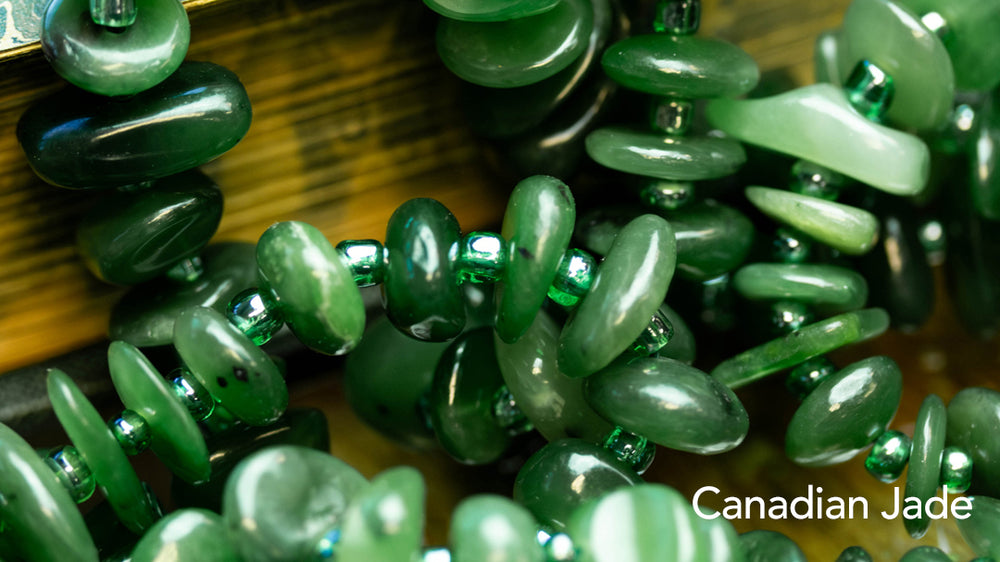
Nephrite and jadeite — the two jades, and why they last
Jade is two minerals that share a name. Nephrite, the older jade of China, British Columbia and New Zealand, is a felted mass of amphibole fibers; jadeite, from Burma and Guatemala, is a granular pyroxene that reached China from Burma only in the late 1700s. Both sit at Mohs 6–7 but are far tougher than the number — the fibers and interlocked grains resist breaking, which is why jade was carved for millennia before it was cut into beads. Both take a soft, waxy polish, and most strands are natural.
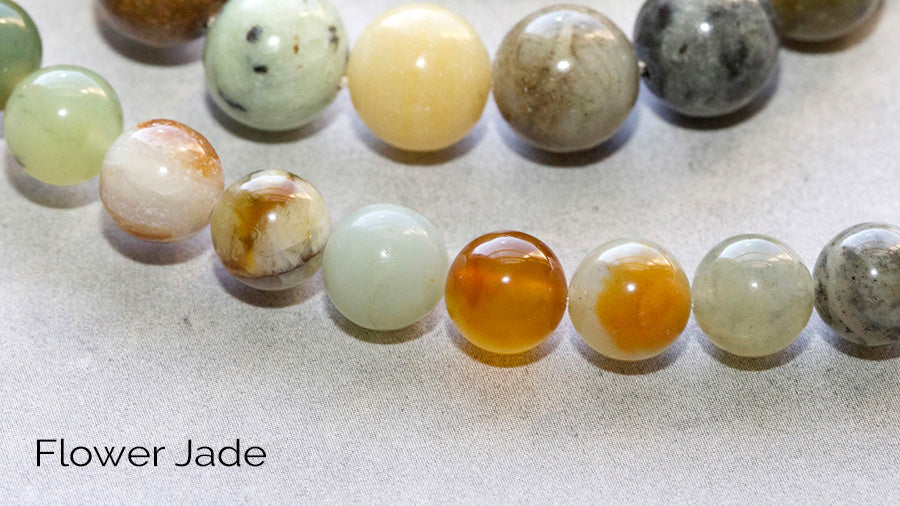
New jade, African jade, yellow jade — the trade names, and what they are
The bead trade sells several stones as jade. New jade, olive jade, lemon jade and new Burma jade are serpentine — softer, Mohs 2.5–5.5, with the same waxy green. African jade is a green grossular garnet, also sold as Transvaal jade. Yellow jade, flower jade, rainbow jade and green-and-white jade are trade names for opaque and mottled material sold by color. Each strand carries its trade name and its recorded treatment — nearly all natural, with dyed material titled dyed — and the product page names the species.
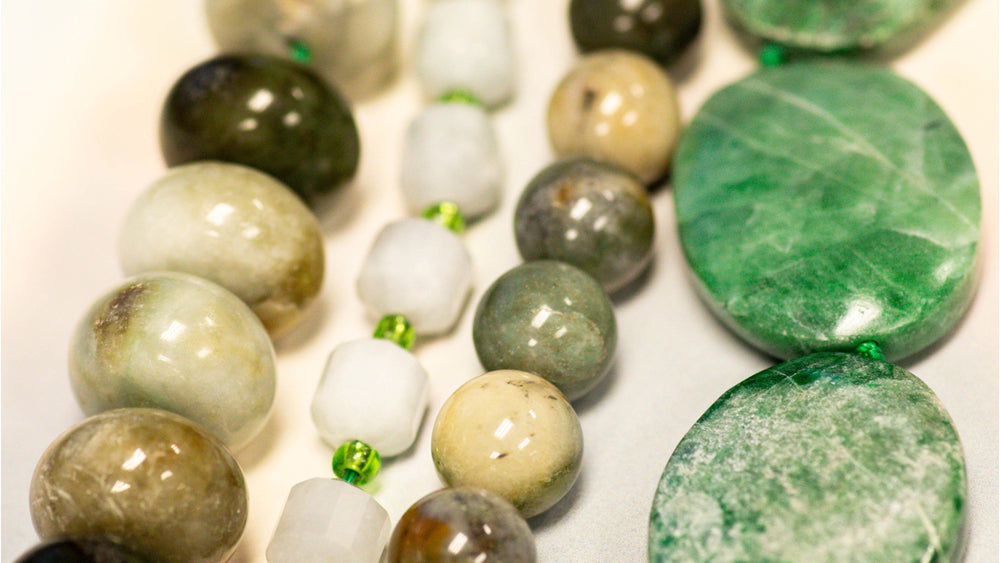
Jade rounds 4mm to 12mm, faceted cuts, chips and pebbles — the mala sizes
Jade is hard-wearing: mild soap and a soft cloth, and no ultrasonic or steam on dyed or polymer-treated material. Smooth rounds run 4mm to 12mm, 8mm the mala size and 6mm the finer strand; faceted rounds and microfaceted 3mm rounds, faceted rondelles 2x3mm to 5x8mm, hexagons, stars, crosses, coins and table-cut cubes; chips, heishi, side-drilled pebbles and top-drilled teeth for the rough look; large-hole 6mm, 8mm and 10mm rounds for cord, on 16-inch and 8-inch strands. It pairs with gold, freshwater pearl, carnelian, lapis and onyx.
About this stone
Color
GreenWhiteLavenderYellowBlackRed-Brown
Origin
ChinaBurma/MyanmarGuatemalaCanada (British Columbia)New ZealandRussia
Mohs hardness
6–7
Treatment categories
NaturalDyedBleached and Polymer-Impregnated (Type B)
Industry-standard treatment
Untreated (Type A) jadeite and natural nephrite are the standard for collector-grade material. Type B (bleached + polymer) and Type C (dyed) jadeite are common in the broader market.
Mineral chemistry
Two distinct minerals share the trade name: nephrite (calcium magnesium iron silicate, Ca2(Mg,Fe)5Si8O22(OH)2) and jadeite (sodium aluminum silicate, NaAlSi2O6)
Crystal system
Monoclinic (both nephrite and jadeite)
Stone family
Jade
Common cuts
RoundRondelleFaceted RoundCoinDonutCabochon
Common sizes
4mm6mm8mm10mm12mm
Care notes
Mohs 6–7 (jadeite is the tougher of the two due to its interlocking crystal structure). Mild soap and soft cloth; ultrasonic generally safe for untreated material but should be avoided for Type B / polymer-impregnated jadeite. Many trade-name 'jades' (New Jade, Serpentine Jade, African Jade) are not true jade — check the species on the product page.
Related stones
Serpentine, Aventurine, Chrysoprase, Hetian (white nephrite)
Frequently asked questions
-
Is jade always green?
No. Nephrite runs from spinach and forest green to gray, cream and the white the Hetian trade calls mutton fat; jadeite adds the emerald green of imperial jade, lavender, white, black and red-brown. Lavender jadeite is the rarest bead color and seldom reaches a strand. On strands the greens dominate — dark BC nephrite, pale Guatemalan jadeite, olive and new jade in serpentine's softer green — and yellow jade, flower jade and rainbow jade bring the other colors under trade names. Dyed color is titled dyed. -
How can real jade beads be told from imitations?
By weight, feel and name. Nephrite and jadeite are dense — heavy for their size, cold to the touch and slow to warm — and so tough that drill holes and edges stay clean where glass and quartzite chip. The polish is waxy or oily rather than glassy; under a loupe glass shows bubbles and dyed quartzite shows color pooled in the cracks. Then the name: new jade, olive jade and African jade are honest trade names for other stones, and only nephrite and jadeite are jade. A strand priced like glass is glass. -
Are new jade, olive jade and African jade real jade?
No, and they are not sold as if they were. New jade, new Burma jade, olive jade and lemon jade are serpentine — a softer stone, Mohs 2.5–5.5, with the waxy green look of jade and a lower price; a steel point marks it where it would skate off nephrite. African jade, also sold as Transvaal jade, is a green grossular garnet from South Africa, harder and heavier than jade. Both wear well in beads and carry their trade names on the strand; the stone record on each product page names the species. -
Is jade treated?
Most bead-grade jade is natural, and nearly every strand here is recorded natural. Jadeite is graded by treatment: Type A is untreated apart from a surface wax, Type B has been bleached and filled with polymer to improve translucency, and Type C is dyed. Type B is the one to check — the polymer yellows with age and fails under ultrasonic or steam cleaning. Nephrite and the serpentine trade jades are natural or dyed, never polymer-filled, and dyed material is titled dyed. Treatment is labelled where known. -
Which jade bead sizes suit malas and bracelets?
8mm is the mala round — 108 beads plus a guru bead string to about 34 inches — and the standard bracelet size; 6mm makes a finer mala or a stacking bracelet, 10mm and 12mm a heavier one, and 4mm rounds work as spacers. An 8-inch strand of 8mm rounds is one bracelet, roughly 25 beads. Jade's toughness suits knotted strands, since the holes do not chip. Large-hole 6mm, 8mm and 10mm rounds — BC jade, rainbow jade, yellow jade — take leather, cord or doubled stretch cord.