
Skip to content

Sky Blue Hubei Turquoise 6-6.5mm Round Beads - 15-16 Inch

Original price $77.00 - Original price $77.00
Original price $77.00
$77.00 - $77.00
Current price $77.00
Login for wholesale

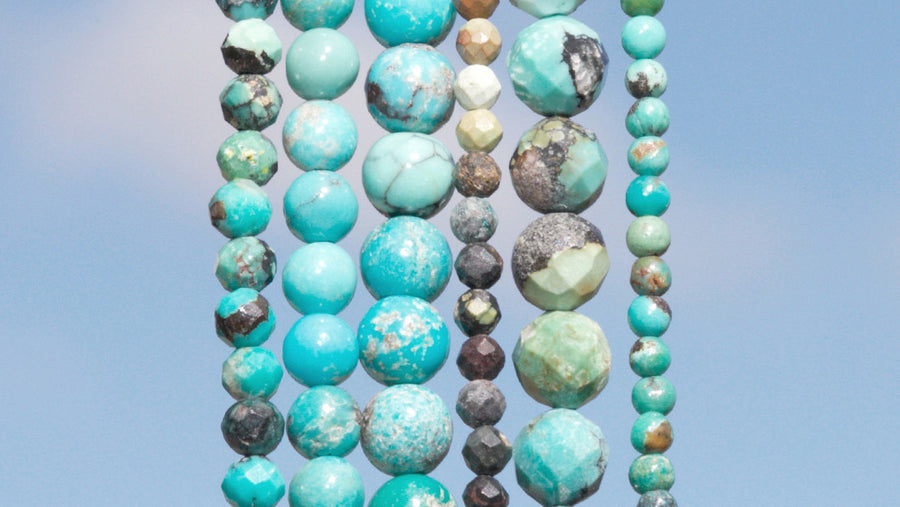
Hubei Turquoise is sourced from Hubei Province in Northern China, one of the most recognized turquoise-producing regions in the world. This material is known for its vivid blues, rich greens, and bold black spiderweb matrix—creating highly distinctive, one-of-a-kind beads.

This collection features material sourced from the Joo-shahn County mines, including the Chin-goo 808 Mine, known for producing turquoise with strong color contrast and dramatic natural patterning. Each strand reflects the unique mineral composition of the region, where copper contributes to blue tones and iron introduces green variations.

Turquoise is one of the oldest known gemstones, used by ancient cultures including the Egyptians and Aztecs for adornment and ceremonial purposes. It forms over long periods as mineral-rich water moves through aluminous rock, depositing copper and other elements that gradually develop into turquoise. Due to its natural porosity, most turquoise is stabilized to improve durability and usability in jewelry design—learn more about turquoise treatments and care.

Due to its natural porosity, most turquoise on the market is stabilized to improve durability, making it suitable for jewelry design while maintaining its natural appearance.

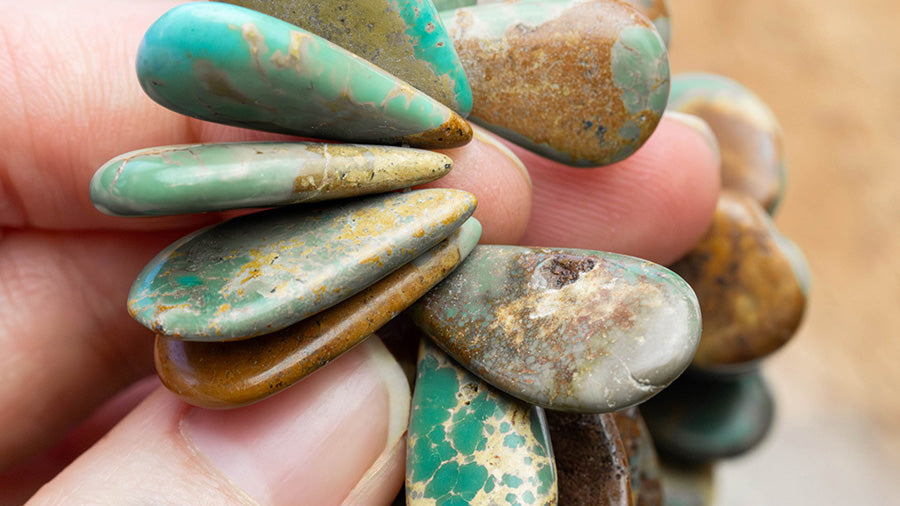
Each strand is unique, with natural variations in color, matrix, and pattern. No two are exactly alike.
SKU TQS-67915

Specifications

Stone type
Turquoise
Cut
Round
Bead size
6.5mm
Strand length
15-16 Inch
Approx. beads per strand
60
Drill style
Center-drilled
Treatment
Natural
Typical origin
China (Hubei Province)
Mohs hardness
5–6
Care
Avoid ultrasonic, steam, bleach, and household cleaners. Soft damp cloth only. Remove before swimming, gym, perfume, hand-washing.
Mineral family
Turquoise

Frequently asked questions

  • Is Hubei turquoise real turquoise?
    Yes. Hubei turquoise is the genuine mineral — hydrated copper-aluminum phosphate — mined in Hubei Province, China. It is not dyed howlite or magnesite (sometimes sold as 'white turquoise' or 'turquenite'), nor dyed quartz. Hubei is the most consistent true turquoise in calibrated bead sizes. Most is stabilized (see below); where material is composite or reconstituted, that should be stated in the title or specifications.
  • Is Hubei turquoise stabilized?
    Most Hubei turquoise on the bead market is stabilized. Raw turquoise is porous and often chalky; stabilization infuses a clear resin to harden it, lock in color, and let it be worked into beads without crumbling at the drill hole. Stabilized turquoise is still turquoise — only the porosity is filled. Untreated natural Hubei exists but is less common in calibrated strands and priced accordingly. Treatment should be disclosed; ask if unsure.
  • What does Hubei turquoise look like?
    Hubei turquoise runs from sky blue to robin's-egg blue, usually with a brown or black matrix, and is prized for being the most consistent turquoise in calibrated bead sizes. Color and matrix still vary strand to strand even within one mine, so pictured strands are representative. For multi-strand or graduated pieces, buy enough from a single order to keep the palette consistent.
  • How do I care for Hubei turquoise?
    Turquoise sits at 5–6 on Mohs and is chemically reactive — it absorbs oils, perfume, lotion, sweat, and chlorinated water, which can turn blue stones green or dull the surface. Wipe with a soft, slightly damp cloth and dry immediately. No ultrasonic, steam, bleach, or jewelry dips. Remove before swimming, the gym, hand-washing, and applying fragrance.
  • What sizes and cuts of Hubei turquoise work best?
    Small rounds and microfaceted rounds (3–4mm) read as classic accent strands and pair with sterling, gold-fill, coral, lapis, and pearl. Rondelles, barrels, and tyre cuts give a Southwest profile; nuggets, chips, and pebbles show off matrix patterning for statement pieces. Because color varies across strands, keep a single order's worth on hand for consistent multi-strand work.