Skip to content

Green Garnet 8mm Faceted Rondelle - 8-Inch

Original price $30.00 - Original price $30.00
Original price $30.00
$30.00 - $30.00
Current price $30.00
Login for wholesale

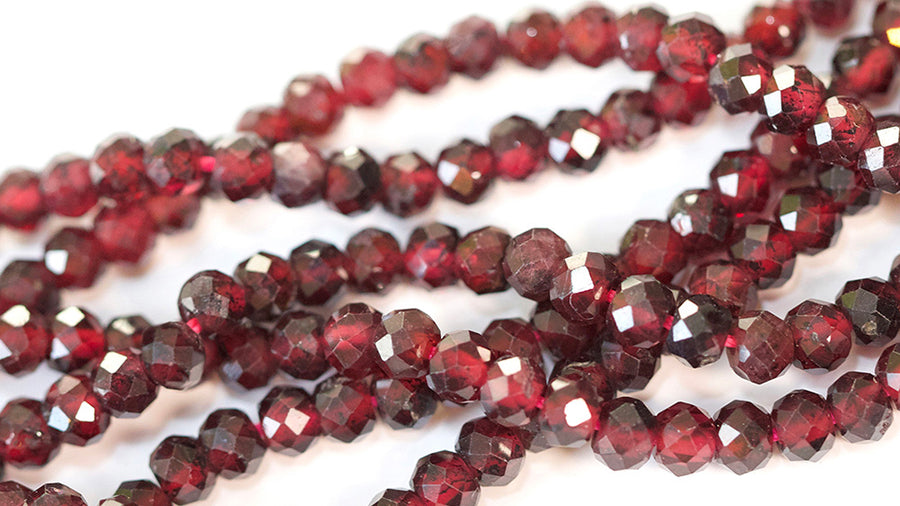
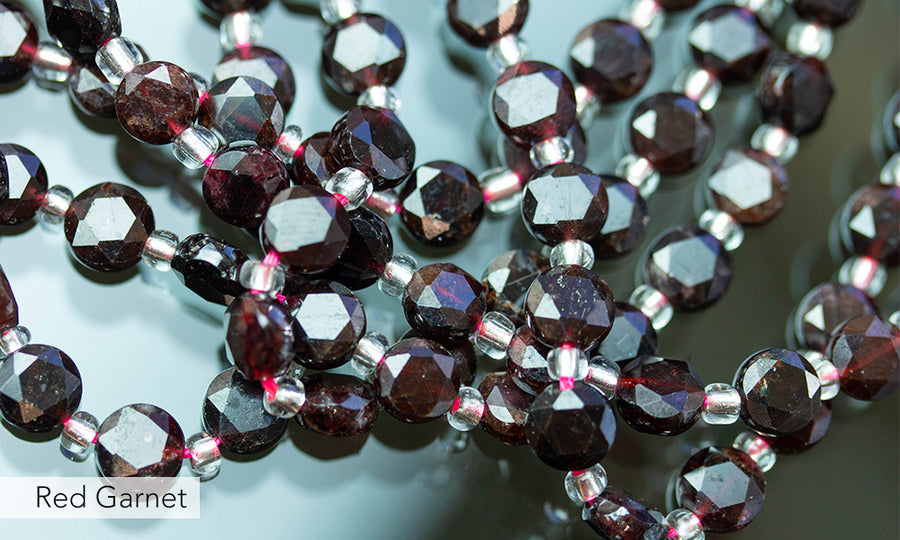
Green Garnet can be among the most valuable of garnets, which come in a variety of colors. Occurring in sizes ranging from a grain of sand to the size of an apple, Garnet was used as far back as the Bronze Age. It has been prized both as an ornamental jewel and for its strong curative powers and protective energies.

SKU GGT8RL-F-8
Specifications

Stone type
Garnet
Cut
Faceted rondelle
Bead size
8mm
Strand length
8 Inch
Approx. beads per strand
22
Drill style
Center-drilled (face to face — disc axis)
Treatment
Natural
Typical origin
IndiaSri LankaMozambiqueMadagascarBrazilUSATanzaniaKenya
Mohs hardness
6.5–7.5
Care
Durable across most jewelry applications. Mild soap and soft cloth; ultrasonic generally safe for inclusion-free strands.
Mineral family
Garnet

Frequently asked questions

  • Is garnet a single stone or a family of related minerals?
    Garnet is a mineral family, not a single species. The group includes almandine and pyrope (the deep red garnets most common in beadwork), rhodolite (a raspberry pyrope-almandine blend), spessartine (orange), grossular (including green tsavorite and hessonite), andradite, and uvarovite. All share a cubic crystal structure and similar silicate chemistry, but color and density vary by species. Most red garnet strands in the trade are almandine or pyrope. If a specific variety matters for your project — rhodolite's pinker tone versus almandine's darker burgundy, for example — the variety should appear on the product page; ask before buying if it isn't specified.
  • Is garnet typically treated, and what does that mean for color longevity?
    Garnet is one of the few colored stones that reaches the market untreated in the vast majority of cases. The color is structural, not surface-applied, so it doesn't fade with normal light exposure and isn't vulnerable to solvents that strip dye from other red stones. You won't typically see heat or oil treatment on garnet beads the way you do with ruby or sapphire. If a specific strand has been treated in any way, that should appear on the product page — ask before buying if it isn't specified. For most garnet beadwork, you can string and finish without worrying about color stability.
  • How does garnet hold up in rings, bracelets, and daily-wear pieces?
    Garnet sits at 6.5–7.5 on the Mohs scale depending on species, which puts it in the same durability range as quartz and tourmaline. That's comfortable for earrings, necklaces, and most bracelet work. For rings or cuffs that take regular knocks, garnet is workable but benefits from bezel or protected settings since cubic crystals can chip on hard impacts. Clean with mild soap and a soft cloth. Ultrasonic cleaning is generally safe for inclusion-free strands but should be avoided if you can see visible feathers or fractures in individual beads. Steam cleaning is best skipped on strung pieces with knotted silk.
  • How do I tell garnet apart from ruby or red spinel in finished pieces?
    All three can read as deep red, but they differ in practical ways. Ruby (corundum) is harder at 9 Mohs and tends toward a slightly pinker, more fluorescent red. Spinel sits between garnet and ruby at 8 Mohs with a cleaner, often brighter red. Garnet typically shows a warmer, more wine-toned red with a touch of brown or violet depending on variety, and its refractive index gives it a softer luster than spinel or ruby under the same polish. In bead form, the most reliable tell is density — garnet feels notably heavy for its size — and price point, since faceted ruby and spinel beads sit at very different tiers.
  • Which garnet cuts and sizes work best for which jewelry projects?
    Smooth rounds in 6mm and 8mm are the workhorse for classic strung necklaces, multi-strand layering, and tasbih-style projects where you want consistent color saturation. Faceted rounds and microfaceted rounds (typically 3–4mm) catch light well for spacer roles, accent strands, and beaded chain. Rondelles and faceted coins layer cleanly between larger focal beads or between metal findings. Cubes and table-cut cubes give a more architectural look for modern designs. Smaller seed-size garnet (2–3mm) is useful for delicate stations, fringe, and bead embroidery where you want red without bulk.