

Apatite Gemstone Beads
Apatite, primarily composed of calcium phosphate mixed with fluoride or chloride, shares its chemical composition with human and animal tooth enamel and bone mineral. Its name, derived from a Greek word meaning 'deceit', is apt since it can easily be confused with other minerals such as Aquamarine and Peridot due to its vibrant array of colors, usually found in shades of blue, green, and yellow.
Facts: Apatite has a rich historical tapestry. It was highly regarded among collectors and gem enthusiasts since the 17th century for its translucent to transparent appearance and striking colors. Historical records suggest Apatite's presence in the jewelry boxes of royalty and aristocrats, symbolizing luxury and a deep appreciation for natural beauty. This gemstone also holds a unique claim to fame in the world of geology for being the source of phosphorus, one of the essential elements used in fertilizers.
Metaphysical / Holistic: Apatite is believed to enhance clarity, creativity, and communication. It is said to be especially useful for personal development and professional growth, aligning ambition with clarity of purpose.


Blue Apatite 6mm Star Cut Coin A Grade - 15-16 Inch
Original price
$28.00
-
Original price
$28.00
Original price
$28.00
$28.00
-
$28.00
Blue Apatite ranges in color from light teal to blue to bright blue to dark blue to green. It can be easily confused with other minerals due to its...
View full details
Original price
$28.00
-
Original price
$28.00
Original price
$28.00
$28.00
-
$28.00


Blue Apatite 12mm Star Cut Coin - 15-16 Inch
Original price
$36.00
-
Original price
$36.00
Original price
$36.00
$36.00
-
$36.00
Blue Apatite ranges in color from light teal to blue to bright blue to dark blue to green. It can be easily confused with other minerals due to its...
View full details
Original price
$36.00
-
Original price
$36.00
Original price
$36.00
$36.00
-
$36.00
A blue you can't fake
Blue apatite has a vivid, almost neon teal-blue that very few natural stones reach — closer to Paraíba tourmaline than to ordinary blue beads. And it's natural: apatite is rarely treated, so that saturated color is the stone's own, not added in a dye bath. Tone ranges from electric blue to deep blue-green, often within a single strand, which is part of its character.
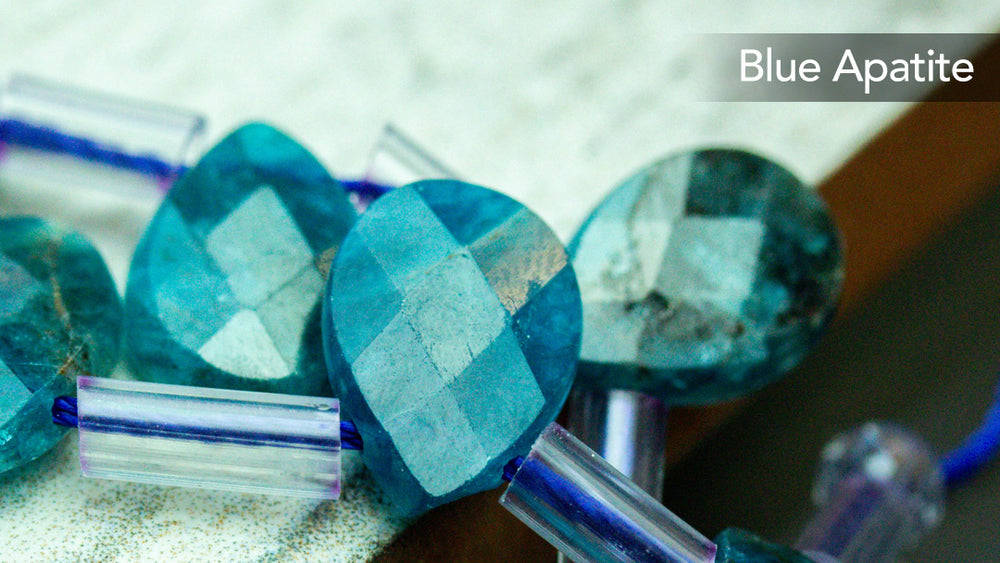
Faceted to show the saturation
Apatite is most striking faceted. Faceted rondelles and rounds let light bounce through the stone and set off that intense blue, giving a strand real depth and glow. It's the finish that makes the color sing — a smooth polish reads softer and more muted by comparison. For a piece that needs to draw the eye, faceted apatite is hard to beat.
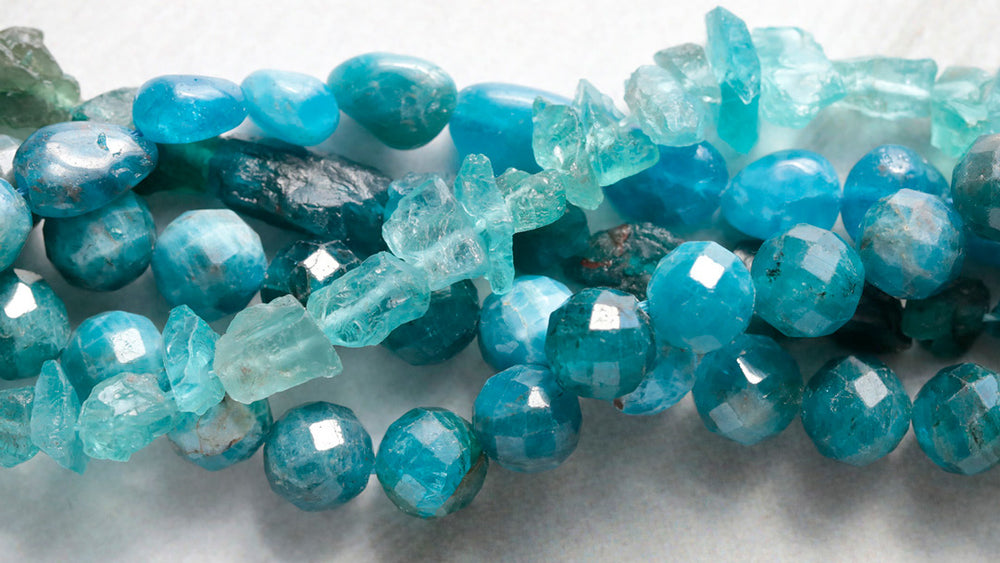
Wear it with a little care
Apatite is a softer stone — Mohs 5 — so treat it like the gem it is: best for necklaces, earrings, and pieces that don't take daily knocks, rather than everyday rings. Skip ultrasonic and steam cleaners, and wipe it with a soft cloth and mild soap. It's stocked in faceted rounds and rondelles from 3–4mm through 8mm. Apatite pairs naturally with amazonite, lapis, and aquamarine.
About this stone
Color
BlueBlue-GreenGreenYellow
Origin
BrazilMadagascarMexicoRussia
Mohs hardness
5
Treatment categories
Natural
Industry-standard treatment
Natural — apatite is rarely treated
Mineral chemistry
Calcium phosphate (Ca5(PO4)3(F,Cl,OH))
Crystal system
Hexagonal
Stone family
Apatite
Common cuts
RoundFaceted RondelleFaceted Round
Common sizes
3mm4mm6mm8mm
Care notes
Moderate hardness (Mohs 5). Avoid ultrasonic and steam; mild soap and soft cloth.
Related stones
Aquamarine, Peridot, Tourmaline
Frequently asked questions
-
What color is apatite?
The bead market is dominated by the blue-to-teal register — sky blue through saturated teal through deep blue-green. Across Dakota's active apatite inventory, 63 of 69 strands are in the blue range, with a smaller green selection and occasional pink. Color varies bead to bead within a strand because apatite is a natural mineral with intrinsic zoning; the strand-level look is a blend rather than a uniform color block. -
Where does apatite come from?
Brazil and Madagascar supply most of the bead-grade apatite in the trade. Brazilian rough — the dominant origin in Dakota's catalog — produces the broader sky-blue to teal range. Madagascan rough produces the saturated electric "neon blue" register the broader market associates with apatite. Green and yellow-green apatite occur in deposits in Mexico, Canada, and Russia but circulate less in the strand market. -
Is apatite dyed?
Apatite is most often sold natural — the saturated blue and green colors are intrinsic to the mineral and do not require dye. Across Dakota's active apatite catalog, 40 strands are explicitly tagged Natural and none are tagged Dyed. Heat treatment is occasionally applied to deepen blue saturation in higher-grade faceted material, less commonly in bead-grade rough. Treatment status should be disclosed; ask before buying if it isn't specified. -
How durable is apatite for jewelry?
Apatite is Mohs 5 — softer than quartz, agate, and most jaspers, and comparable to lapis or fluorite. It is adequate for necklaces, earrings, and bracelets in ordinary wear, but it scratches more easily than the harder stones designers commonly string alongside it. Avoid ultrasonic and steam cleaning; clean with a soft cloth and mild soap. Apatite is also sensitive to acids (it's a phosphate mineral), so avoid prolonged exposure to acidic cleaning solutions. For ring-grade wear, a harder focal stone is the safer choice. -
What's the difference between apatite, aquamarine, and paraiba tourmaline?
All three produce saturated blue-to-teal color and are visually confusable — apatite's name actually derives from the Greek for "to deceive" because of this. The differences are mineralogical and economic: aquamarine is a beryl (Mohs 7.5–8), durable and higher-priced; paraiba tourmaline is a copper-bearing tourmaline (Mohs 7–7.5), among the highest-priced colored gemstones; apatite is a calcium phosphate (Mohs 5), softer but with comparable saturated color at a strand price that scales to production. Designers shop apatite when the color is the goal and the budget or durability profile of aquamarine and paraiba doesn't fit.