Skip to content

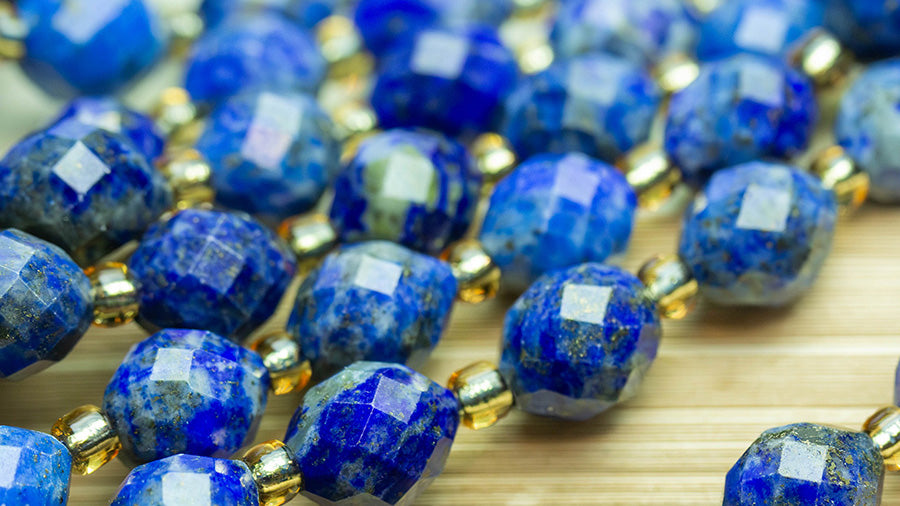
Lapis 7x8mm Faceted Rice Bead - 15-16 Inch

Original price $32.00 - Original price $32.00
Original price $32.00
$32.00 - $32.00
Current price $32.00
Login for wholesale

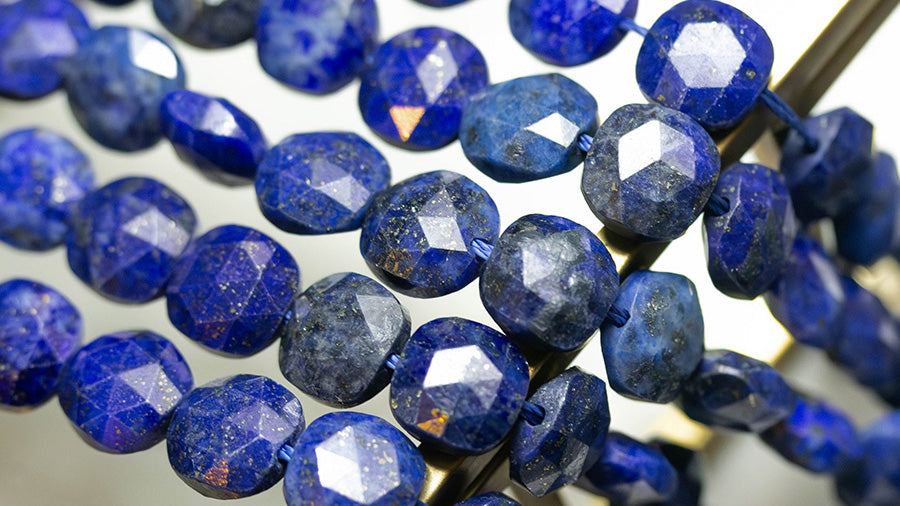
Lapis is a semi to precious stone and one of the most sought after throughout history. It is highly regarded for its beautiful blue color flecked with gold inclusions of pyrite, and was prized in ancient times for the ultramarine dye derived from it. This dye was said to create Michelangelo’s favorite shade of blue. It is one of the world’s oldest known stones, mined since 4000 BCE, originally from the Lapis to Lazuli mine in Afghanistan.

SKU LAP7x8EGG-F
Specifications

Stone type
Lapis lazuli
Cut
Rice
Strand length
15-16 Inch
Drill style
Center-drilled (lengthwise)
Treatment
Natural
Typical origin
AfghanistanChileRussia
Mohs hardness
5–5.5
Care
Soft (Mohs 5–5.5). Sensitive to acids, ultrasonics, and prolonged water. Soft cloth and mild soap only.
Mineral family
Lapis Lazuli

Frequently asked questions

  • Is this lapis natural, dyed, or waxed?
    Lapis lazuli reaches the bead trade in three forms: natural (untreated, color comes from lazurite content), waxed (a light surface wax to deepen color and seal porosity), and dyed (color enhanced with blue dye, often to mask calcite veining). All three are standard in the lapis market. Natural Afghan material with rich blue and visible pyrite is what most designers picture, but waxed and dyed strands are common at accessible price points. Treatment for this specific SKU should be disclosed — ask before buying if it isn't specified, especially if you need untreated material for a client project.
  • How do I tell real lapis from sodalite or dyed substitutes?
    True lapis lazuli is a rock made primarily of lazurite, usually with pyrite inclusions (the gold flecks) and calcite (the white veining). Sodalite is a closely related blue mineral but lacks pyrite and typically shows white sodium-rich veining rather than the metallic gold of pyrite — if you see no pyrite at all, suspect sodalite or a dyed substitute. Dyed howlite or dyed magnesite sometimes gets sold as lapis at low prices; both lack pyrite and the dye often concentrates in surface cracks. Pyrite flecks scattered through the bead, not just on the surface, are the most reliable visual tell.
  • What does the pyrite and calcite content tell me about a strand?
    Lapis quality in the bead trade tracks roughly with lazurite saturation. Strands with deep, even royal blue and fine scattered pyrite are the classic look most designers want. Heavier calcite (white veining or cloudy patches) lowers the visual saturation and is common in lower-cost material — sometimes that mottled look is exactly what a designer wants for a more rustic piece. Excess pyrite can read as gray rather than gold. Color and matrix distribution should be visible in the product photos; if matching across multiple strands matters for your project, order together from the same lot.
  • What jewelry types does lapis work well in?
    At Mohs 5–5.5, lapis is soft for a gemstone — comfortably durable in earrings, necklaces, pendants, and bracelets that don't take heavy abrasion. It's a poor choice for everyday rings, where it will scratch and lose polish over time. The 4mm and 6mm rounds and rondelles work well for delicate strung pieces and spacer accents; 8mm and 10mm rounds anchor statement necklaces. Lapis pairs naturally with gold-tone findings (echoing the pyrite), as well as with coral, carnelian, turquoise, and pearl in classic palettes. Faceted cuts amplify the blue under light; smooth rounds emphasize the matrix character.
  • How should finished lapis pieces be cleaned and stored?
    Lapis is sensitive to acids, ultrasonic cleaners, steam, and prolonged water exposure — any of these can dull the polish, leach dye if the material is dyed, or strip surface wax. Clean with a soft cloth and, if needed, a quick wipe with mild soapy water followed by immediate drying. Avoid perfume, hairspray, and household chemicals on the stone. Store lapis separately from harder gemstones (quartz, topaz, anything above Mohs 7) to prevent scratching. If you've stringing dyed or waxed lapis, advise the end customer that color may shift slightly over years of wear, especially with skin contact and sunlight.