Skip to content

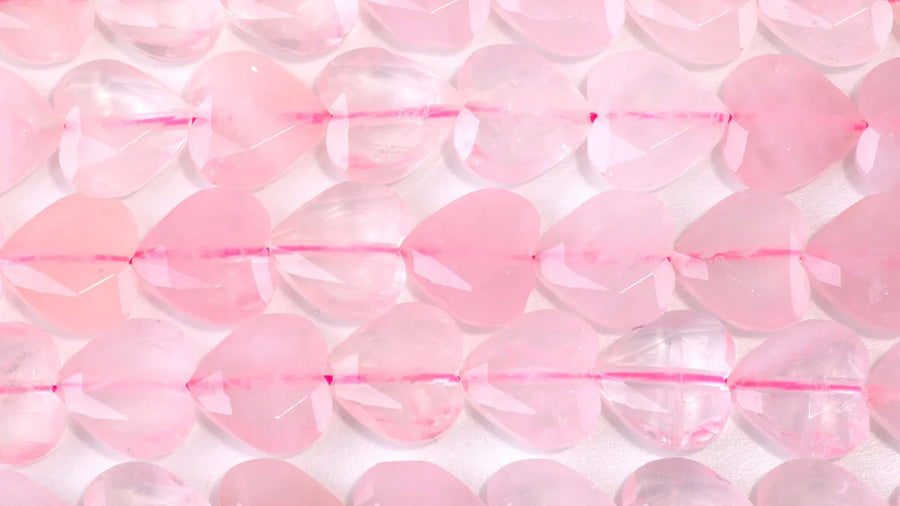
Rose Quartz 6mm Star - 15-16 Inch

Original price $12.00 - Original price $12.00
Original price $12.00
$12.00 - $12.00
Current price $12.00
Login for wholesale

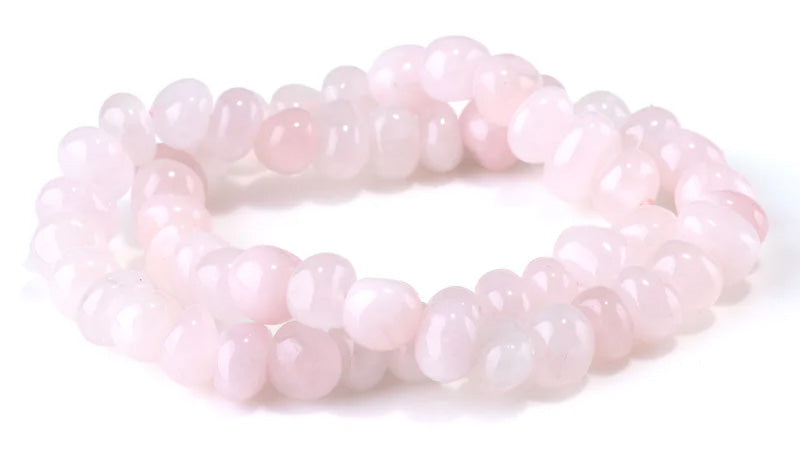
Rose Quartz is a silicon dioxide crystal and one of the most common varieties of the Quartz family. It is a translucent to transparent stone with a soft pale pink to rose red hue, thought to be derived from trace amounts of titanium, iron or manganese impurities within the stone. Considered by ancient Egyptians and Romans to have powers of beautification and wrinkle protection, Rose Quartz facial masks have been recovered from Egyptian tombs.

SKU RQZ6STAR
Specifications

Stone type
Quartz
Cut
Star cut
Bead size
6mm
Strand length
15-16 Inch
Approx. beads per strand
60
Drill style
Center-drilled (point to point)
Treatment
Dyed
Typical origin
BrazilMadagascarSouth AfricaUSA
Mohs hardness
7
Care
Durable (Mohs 7). Mild soap and soft cloth; color can fade slightly with prolonged sun exposure.
Mineral family
Quartz

Frequently asked questions

  • Is rose quartz typically natural or dyed?
    Most rose quartz on the bead market is natural — the pink comes from trace titanium, manganese, or microscopic dumortierite inclusions in macrocrystalline quartz. Color ranges from very pale blush to a saturated rosy pink, and lower-saturation rough is sometimes dyed to deepen the color, particularly in faceted or small-bead cuts where pale material reads almost white. Dyed quartz is a separate, common product in the trade. Treatment should be disclosed — if it isn't specified and the distinction matters for your project, ask before buying.
  • Does rose quartz fade in sunlight?
    Rose quartz is known to lose some color saturation under prolonged UV exposure, especially paler material. For finished jewelry this rarely matters at the scale of normal wear, but display strands sitting in a sunny window or pieces stored on an open bust near direct light can shift over months to years. Store strands in a closed drawer or opaque bag, and advise customers to keep statement pieces out of long sun exposure. Mohs 7 means the stone itself is durable; the concern is purely color, not structural.
  • What jewelry projects suit rose quartz best?
    At Mohs 7, rose quartz handles all jewelry categories — earrings, necklaces, bracelets, and rings with reasonable bezel or prong protection. The soft pink reads as a neutral against silver, rose gold, and yellow gold, and pairs naturally with moonstone, labradorite, pearl, garnet, and smoky quartz. Smooth rounds and pebbles show off the milky translucency typical of the material; faceted cuts add sparkle and read more saturated because facet returns concentrate the color. Smaller beads (4–6mm) work for delicate layering; 8–12mm rounds anchor statement strands.
  • How do I tell rose quartz from pink opal or dyed quartz?
    Rose quartz is macrocrystalline quartz and typically shows a slightly cloudy, internally translucent appearance with subtle fibrous inclusions that scatter light. Pink opal is softer (Mohs 5.5–6.5), more opaque, and shows a chalkier, porcelain-like body without the same internal glow. Dyed quartz or dyed agate tends to show color concentrated along fractures or drill holes and reads more uniformly saturated than natural rose quartz, which usually varies bead to bead. For mixed-strand projects, lining beads up under daylight makes the difference easy to see.
  • How should finished rose quartz pieces be cleaned and stored?
    Clean with mild soap, lukewarm water, and a soft cloth or soft brush around the drill holes; rinse and pat dry. Avoid ultrasonic and steam cleaners on strands with heavy internal fractures, which are common in rose quartz and can propagate under vibration. Keep finished pieces away from prolonged direct sunlight to preserve color, and store separately from harder stones like topaz, sapphire, or diamond to avoid surface scratches. Cosmetics, perfume, and chlorinated water won't damage the stone but can dull the polish over time, so put jewelry on last and remove before swimming.