Skip to content

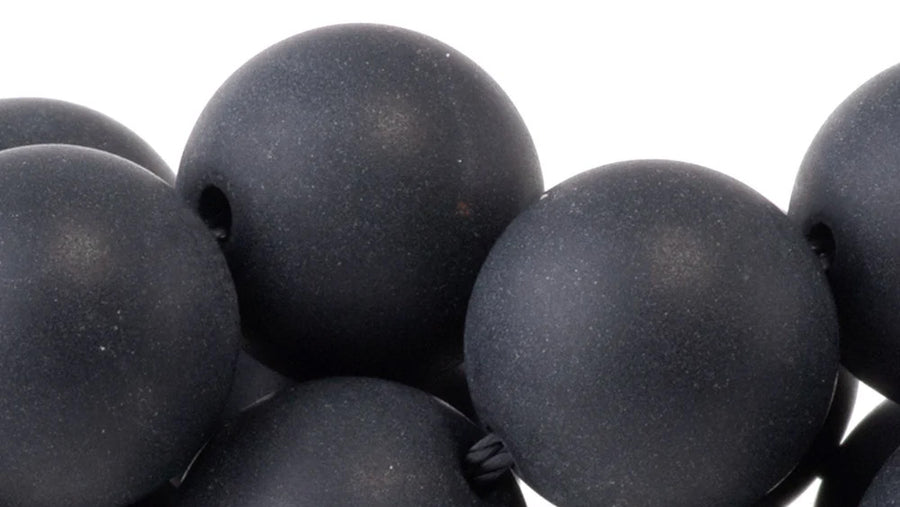
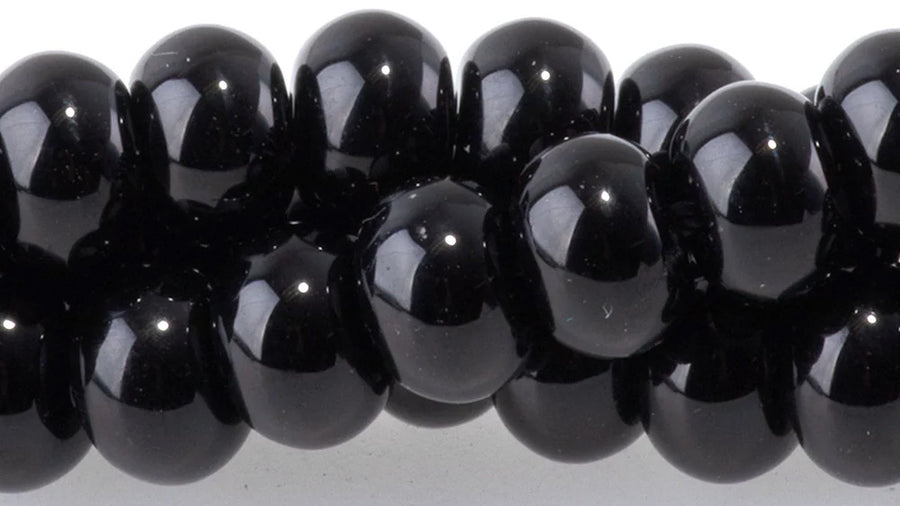
Green Onyx 8x11mm Leaf - 8 Inch

Original price $95.00 - Original price $95.00
Original price $95.00
$95.00 - $95.00
Current price $95.00
Login for wholesale

Onyx is a black and white banded Chalcedony, a cryptocrystalline Quartz. It is often thought of as an all to black stone, and much of the black Onyx on the market has been artificially colored. Onyx has been both revered and feared throughout history. It is referenced in many sacred texts and historical manuscripts and is the first precious stone mentioned in the Bible. However in some regions, such as China, it was feared for centuries as a bad luck stone.

SKU ONX8x11LEAF-GRN
Specifications

Stone type
Chalcedony
Strand length
8 Inch
Treatment
DyedHeated
Typical origin
MexicoPakistanBrazilMadagascarUruguay
Mohs hardness
6.5–7
Care
Durable (Mohs 6.5–7). Mild soap and soft cloth; dyed material can fade with prolonged sun exposure.
Mineral family
Chalcedony

Frequently asked questions

  • Is black onyx naturally black, or is it dyed?
    Most solid-black onyx on the bead market is chalcedony that has been dyed and/or heat-treated to achieve uniform deep black. This is a long-standing, stable trade treatment going back centuries — natural chalcedony banding is rarely pure black on its own. The dye penetrates the cryptocrystalline structure and is considered permanent under normal wear. Banded onyx and natural-color onyx (white, gray, brown layers) exist as well and are typically untreated. Treatment status should be disclosed for each SKU — ask before buying if it isn't specified, especially if you need disclosure for a retail customer.
  • How does dyed black onyx hold up in finished jewelry?
    Dyed black onyx is durable for most jewelry applications. At Mohs 6.5–7 it resists scratching in bracelets, necklaces, and earrings, and the dye is stable through normal wear, sweat, and gentle cleaning. The main caution is prolonged direct sun exposure, which can gradually shift the color on some dyed material — store finished pieces out of windows and display cases with strong UV. Clean with mild soap, water, and a soft cloth. Avoid ultrasonic cleaners, steam, bleach, and acetone-based solvents, all of which can affect both the dye and the polish.
  • What's the difference between onyx, sardonyx, agate, and chalcedony?
    All four are varieties of chalcedony — cryptocrystalline quartz — separated by trade convention rather than mineralogy. Onyx refers to chalcedony with parallel, straight banding (commonly black/white, though solid black dominates the bead market). Sardonyx is the same banded structure but with reddish-brown sard layers instead of black. Agate is chalcedony with curved, concentric, or irregular banding. Plain chalcedony is the uniform, unbanded material. In bead form, solid-black onyx looks distinct, but banded onyx and certain agates can overlap visually — the band geometry is the tell.
  • What does onyx pair well with in design work?
    Black onyx is one of the most versatile neutrals in the bead trade. It reads as a hard graphic black against warm metals (brass, bronze, gold-fill, vermeil) and as a sleek contemporary black with sterling, oxidized silver, and steel. It supports almost any accent color — turquoise, coral, carnelian, lapis, pearl, hematite — without competing. Faceted rounds and rondelles add sparkle for evening and statement pieces; smooth rounds work for menswear, malas, and minimalist designs. Coin, square, and star cuts give graphic anchors for pendants and focal stations.
  • Does the finish (smooth vs faceted) change how onyx wears?
    Yes, in practical ways. Smooth polished onyx — rounds, rondelles, coins, donuts — shows its glassy luster best and hides micro-scuffs from daily wear. Faceted onyx (rounds and rondelles) catches light sharply and reads more formal, but the facet edges are the first place polish dulls over years of contact wear, so faceted strands suit earrings, necklaces, and occasional-wear bracelets better than daily stackers. Star cuts and other shaped cuts behave like faceted material for care purposes. Across all finishes, the Mohs 6.5–7 hardness means onyx wears harder than the metal it's strung with.