Skip to content

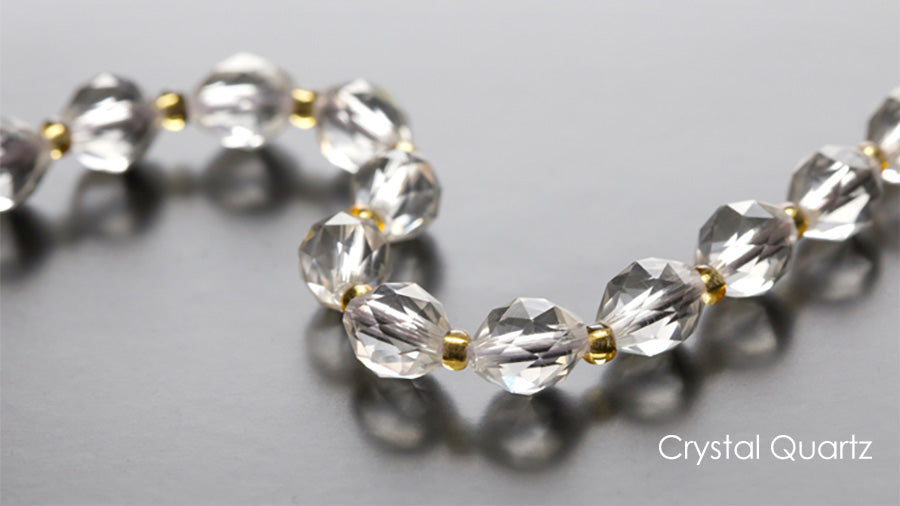
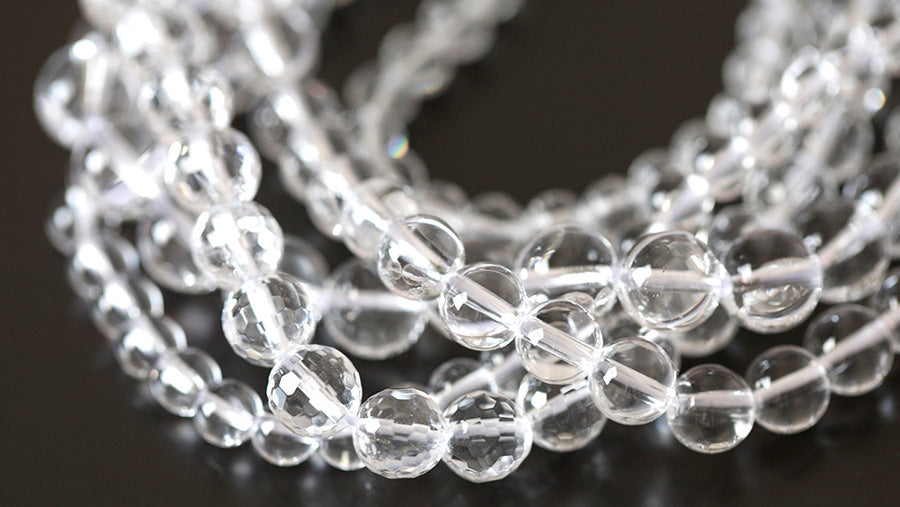
Crystal Quartz 12x13mm Faceted Hexagon - 15-16 Inch

Original price $26.00 - Original price $26.00
Original price $26.00
$26.00 - $26.00
Current price $26.00
Login for wholesale

Crystal Quartz is a naturally occurring clear and colorless Quartz. It is a crystalline form of Quartz said to have many divine properties including the ability to amplify and radiate the energy put into it and help individuals achieve their goals. Due to its color and clarity, until the 17th century Crystal Quartz was believed to be permanently frozen water.

SKU CRY12x13HEX-F
Specifications

Stone type
Quartz
Cut
Hexagon
Strand length
15-16 Inch
Drill style
Center-drilled (face to face)
Treatment
Natural
Typical origin
BrazilUSA (Arkansas)MadagascarChina
Mohs hardness
7
Care
Durable (Mohs 7). Mild soap and soft cloth; ultrasonic generally safe.
Mineral family
Quartz

Frequently asked questions

  • Is crystal quartz the same as rock crystal?
    Yes — "crystal quartz" and "rock crystal" are trade names for the same material: colorless, transparent macrocrystalline quartz (SiO2, Mohs 7, trigonal). The terminology varies by supplier and era; older trade literature favors "rock crystal," while modern bead catalogs often use "crystal quartz" or just "clear quartz." Colored varieties of the same species get their own names — smoky quartz, rose quartz, citrine, amethyst — so when a strand is labeled simply crystal quartz, you should expect colorless, water-clear to lightly included material. Clarity grades from glass-clear to cloudy or veiled depending on the rough; the listing photos are the best clarity reference for a specific SKU.
  • Is crystal quartz typically treated or dyed?
    Colorless crystal quartz is generally sold as natural — no dye, no heat, no irradiation needed to produce the look. The standard treatment status in this family is natural, which is why the stone is a workhorse for designers who want an untreated component in a piece. That said, quartz is also the host material for many dyed and coated novelties (mystic quartz, aura quartz, dyed crackle quartz), so verify the specific SKU. Treatment status should be disclosed — ask before buying if it isn't specified. Faceted strands are sometimes labeled "crystal" loosely; confirm you're buying quartz and not leaded glass if that distinction matters for your line.
  • What jewelry projects does clear quartz work best in?
    Clear quartz is one of the most versatile bead materials in the trade. At Mohs 7 it stands up to daily-wear bracelets, necklaces, and earrings, and the colorless body lets it pair with virtually any accent stone or metal without color conflict. Faceted rounds and rondelles add sparkle as spacers between colored gemstones; smooth rounds and pebbles read more organic. Points and larger nuggets work as focal beads in pendant and statement designs. Because it's transparent, drill quality and stringing material show through — use color-matched cord or wire, and inspect for chips at the drill hole before stringing, especially on faceted cuts.
  • How do I tell crystal quartz from glass or leaded crystal?
    Natural quartz beads usually show some character — veils, internal fractures, tiny inclusions, or slight optical variation between beads on a strand. Machine-made glass tends to be uniformly flawless, sometimes with seam lines or rounded mold marks at the drill. Quartz also feels cooler to the touch than glass and is harder (Mohs 7 vs. roughly 5.5 for soda-lime glass), so it resists scratching from a steel pick. Leaded "crystal" glass is denser and heavier per bead than quartz of the same size. For trade purposes, the strand's labeling is the primary reference; the listing identifies the material, and you can ask before buying if anything is unclear.
  • How should finished crystal quartz pieces be cleaned and stored?
    Quartz is durable enough for routine cleaning with mild soap, warm water, and a soft cloth or brush. Ultrasonic cleaners are generally safe for solid, untreated quartz beads, though avoid ultrasonic and steam if the strand is part of a mixed-material piece where softer stones or glued findings could be damaged. Quartz can chip at facet edges and drill holes from sharp impact, so store strands flat and separate finished pieces from harder stones (topaz, sapphire, diamond) that can scratch the polish. Prolonged direct sunlight is fine for colorless quartz but can fade some dyed quartz varieties, so check the SKU's treatment notes if color is involved.