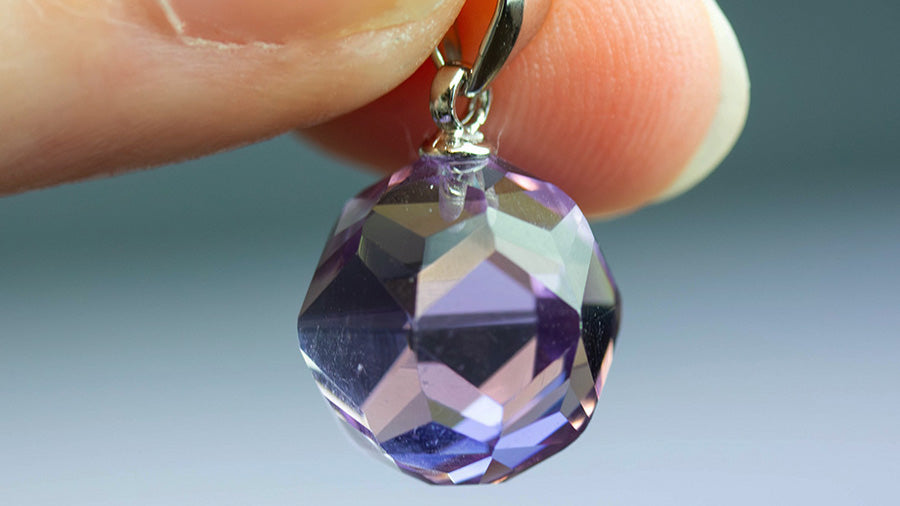
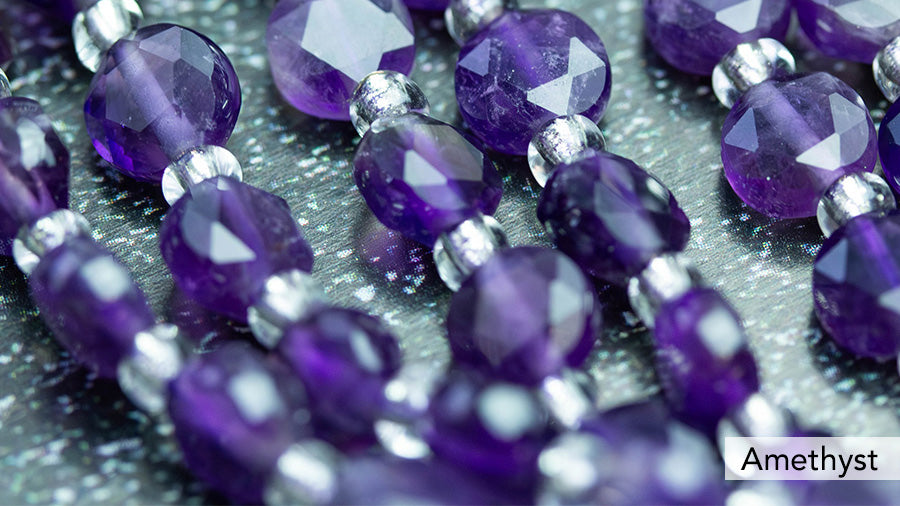
Amethyst 7x10mm Faceted Tube - 15-16 Inch
Original price
$36.00
-
Original price
$36.00
Original price
$36.00
$36.00
-
$36.00
Amethyst is a beautiful purple stone, known as a “Gem of Fire” by ancient cultures. It has been greatly sought after throughout history and was at times valued as highly as Diamond. Today, this semi to precious variety of quartz is found in many locations around the world. The presence of Manganese within the stone produces the purple hue, and variation of the amount of iron in the stone creates a color range from reddish purple to deep violet to light lilac. The name derives from the Greek word for “not intoxicated” and was once believed to prevent drunkenness and overindulgence.
SKU AME7x10TUB-F
Specifications
Stone type
Quartz
Cut
Tube
Strand length
15-16 Inch
Drill style
Center-drilled (lengthwise)
Typical origin
BrazilUruguayZambiaMadagascarRussia
Mohs hardness
7
Care
Durable (Mohs 7). Ultrasonic and steam generally safe for natural material; avoid prolonged direct sunlight which can fade amethyst over years.
Mineral family
Quartz
Frequently asked questions
-
Is amethyst typically treated, and how can I tell?
Amethyst is a purple quartz colored by trace iron and natural irradiation. The two standard categories in the trade are natural (untreated) and heated. Heat treatment is sometimes used to even out color or lighten material that runs very dark at the tips; aggressive heating converts amethyst to citrine or to greenish prasiolite, so true heated amethyst is less common than heated citrine. Treatment status should be disclosed — ask before buying if it isn't specified. Visually, natural and gently heated amethyst look identical in finished jewelry, so the practical difference is documentation rather than appearance. -
Will amethyst fade in finished jewelry?
Amethyst can fade with prolonged, direct sunlight exposure over months and years — the iron color centers that produce purple are light-sensitive. For most jewelry that lives in a drawer or on a wrist intermittently, fading is not a practical concern within a normal wearing lifetime. The risk cases are pieces displayed in sunny windows, worn poolside daily, or stored on a sun-facing dresser. Advise customers to store amethyst pieces out of direct sun. Heat exposure (leaving in a hot car, near a stove) can also shift color, so finished pieces should be kept away from sustained heat. -
How does amethyst pair with other stones in a design?
Amethyst's cool violet sits comfortably alongside other quartz family stones — rose quartz, smoky quartz, citrine, and ametrine all share the same hardness and luster, which makes mixed-quartz strands wear evenly. It also reads well against sterling and oxidized silver, and against warm metals like rose gold and brass where the purple/copper contrast pops. For color pairings, look to complementary yellows (citrine, lemon quartz), analogous blues (iolite, kyanite, sodalite), or neutrals (labradorite, moonstone, pyrite). Darker Uruguayan material reads dressy; lighter lavender Brazilian material works well in everyday and bridal designs. -
Is amethyst durable enough for rings and bracelets?
Amethyst is Mohs 7 quartz, which is the standard durability threshold for daily-wear jewelry. It handles bracelets, earrings, and pendants without issue. For rings, amethyst wears well in protective settings (bezel, halo) but cabochons and faceted stones in exposed prong settings will eventually show abrasion on high points from daily contact — the same caveat that applies to any Mohs 7 stone. Ultrasonic and steam cleaning are generally safe for untreated material; dyed or fracture-filled stones (uncommon in amethyst but possible in very pale or heavily included goods) should be cleaned with warm soapy water and a soft brush instead. -
What stones get confused with amethyst in the bead trade?
The most common look-alikes are synthetic (lab-grown) amethyst, which is mineralogically identical quartz produced hydrothermally, and dyed quartz or dyed agate marketed under vague purple-stone names. Natural amethyst typically shows color zoning — bands or patches of deeper and lighter purple within a single bead — while dyed material tends to read flat and uniform, sometimes with dye concentrated in fractures. Ametrine is amethyst and citrine in the same crystal, so a single bead shows purple and golden zones. Rose quartz and purple chalcedony are unrelated stones with different color, saturation, and translucency. Material identity should be disclosed — ask before buying if it isn't specified.