Product Specifications
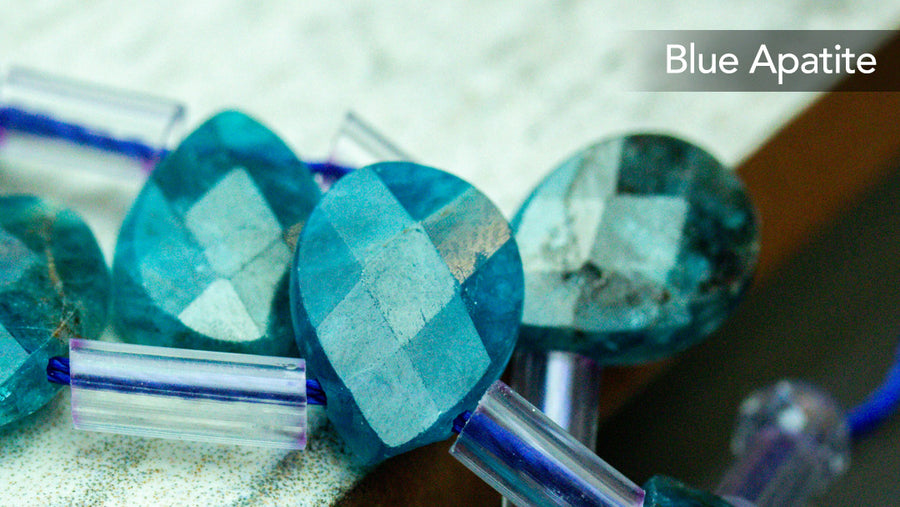
A blue you can't fake

Faceted to show the saturation
Pairs well with
Pairs with Amazonite
Complete the pairing
Shop Pairs with Amazonite
Choose a size and finish to complete the pairing.
Amazonite 8mm Round Large Hole 8-Inch
Amazonite is a member of the feldspar family, Amazonite, also known as Amazon Stone, ranges in color from blue-green to green. It is an opaque ston...
View full detailsAmazonite 8mm Round 8-Inch
Amazonite is a member of the feldspar family, Amazonite, also known as Amazon Stone, ranges in color from blue-green to green. It is an opaque ston...
View full detailsAmazonite 8mm Faceted Rondelle Large Hole 8-Inch
Brazilian Amazonite is an opaque blue to green to light green stone, often occurring with inclusions of white, yellow or gray and occasionally tran...
View full detailsBlack Gold Amazonite 8mm Large Hole Round - 8-Inch
Black Gold Amazonite is a member of the Feldspar family and varies in hue from robin’s egg blue to blue-green to black, occasionally mingled with r...
View full detailsAmazonite 4mm Round 8-Inch
Amazonite is a member of the feldspar family, Amazonite, also known as Amazon Stone, ranges in color from blue-green to green. It is an opaque ston...
View full detailsAmazonite 10mm Round - 8-Inch
Amazonite is a member of the feldspar family, Amazonite, also known as Amazon Stone, ranges in color from blue-green to green. It is an opaque ston...
View full detailsBlack Gold Amazonite 6mm Round - 8-Inch
Black Gold Amazonite is a member of the Feldspar family and varies in hue from robin’s egg blue to blue-green to black, occasionally mingled with r...
View full detailsBlack Gold Amazonite 8mm Round - 8-Inch
Black Gold Amazonite is a member of the Feldspar family and varies in hue from robin’s egg blue to blue-green to black, occasionally mingled with r...
View full detailsMATTE Black Gold Amazonite 8mm Large Hole Rondelle 8-Inch
Black Gold Amazonite is a member of the Feldspar family and varies in hue from robin’s egg blue to blue-green to black, occasionally mingled with r...
View full detailsFrequently asked questions
-
What gives apatite its signature blue-green color?
Apatite is a calcium phosphate mineral, and trace elements drive its color range — iron and rare earth ions produce the neon teal and Caribbean blue tones the trade associates with the stone, while manganese contributes to yellow and green material. Dakota carries apatite from Brazil, Madagascar, Mexico, and Russia, and color varies meaningfully by deposit. Saturation also varies bead to bead within a strand because apatite often shows natural color zoning. When matching multiple strands for a project, order from a single batch when possible — even calibrated rounds will shift between lots. -
Is apatite typically treated or dyed?
Most apatite on the bead market is sold as natural color, sometimes with light heat to stabilize tone. Dye is uncommon in this family because the natural color is already strong, but it does occur on lower grades. Treatment should be disclosed — ask before buying if it isn't specified. If color is critical to your design, request a photo of the actual strand. The blues and teals are stable under normal wear and won't fade from light exposure the way some dyed materials do. -
How durable is apatite for finished jewelry?
Apatite sits at Mohs 5, which puts it on the softer side for daily-wear jewelry. It's well suited for earrings, necklaces, and bracelets that don't take repeated impact, but it's not a good choice for rings or bangles that knock against hard surfaces. The stone also has distinct cleavage and can chip if dropped. Avoid ultrasonic cleaners, steam, and acidic cleaners — apatite is a phosphate and reacts with acids. Clean with mild soap, lukewarm water, and a soft cloth, and store separately from harder stones like quartz or beryl. -
What stones is apatite confused with in the bead trade?
Apatite's saturated blue-green overlaps visually with aquamarine, blue tourmaline (indicolite), and on the green end, peridot. Aquamarine and tourmaline are both harder (Mohs 7–7.5) and typically run cleaner and lighter in tone — apatite's color tends to be more intense but slightly hazier, with visible inclusions common in faceted cuts. Peridot reads more yellow-green next to apatite's cooler tones. Price and hardness are the practical tells: apatite is softer and more affordable than the beryl and tourmaline material it resembles. -
What projects does apatite work well for?
Apatite excels in pieces where saturated color carries the design — bead-woven necklaces, earring drops, multi-strand statement pieces, and pairings with sterling or oxidized silver that pushes the teal forward. Faceted rounds and rondelles catch light well given the stone's vitreous luster, and small sizes (4mm, 6mm) work for delicate stringing while 8–10mm rounds anchor focal pieces. Apatite pairs cleanly with pearl, labradorite, moonstone, and pyrite. For colorwork, it bridges between aquamarine-toned pastels and deeper teals like chrysocolla or amazonite without competing.