

All High-End Strands
Extraordinary stones deserve their own stage. The High-End collection spotlights strands cut from the best rough—think vivid tourmaline slices, saturated emerald rounds, and near-flawless sapphire rondelles—each artisan-cut to showcase maximum light, clarity, and play of color. Many lots yield only a handful of strands, so what you see here often can’t be reordered once it’s gone.
Expect designer-grade polish, tightly calibrated dimensions, and hand-matched color flow that speeds up layout work at the bench. If your next piece calls for materials that command attention and hold long-term value, this curated lineup delivers the rarest options in the Dakota Stones vault. Act quickly; inventory refreshes with the seasons.


Elisa Turquoise 5-13mm Graduated Rounds - 15-16 Inch
Original price
$550.00
-
Original price
$550.00
Original price
$550.00
$550.00
-
$550.00
This turquoise is mined from the Sonora mines in Mexico. Like all other natural turquoise, its coloring is the result of the chemical reaction that...
View full details
Original price
$550.00
-
Original price
$550.00
Original price
$550.00
$550.00
-
$550.00
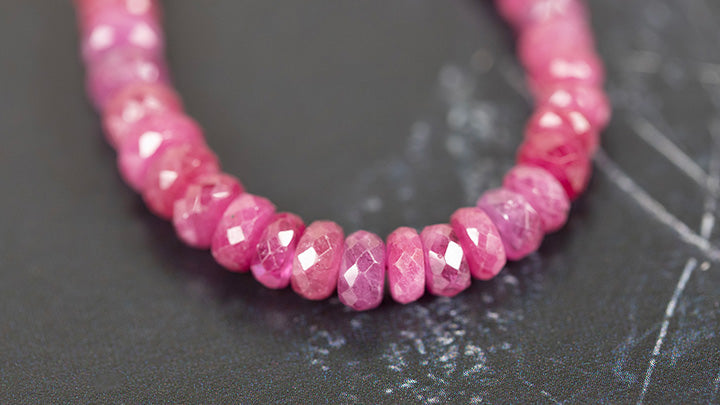
The rare end of the catalog
This is where the catalog reaches its top shelf. Sapphire, ruby, emerald, and tanzanite in working jewelry sizes, Ethiopian opal and Australian boulder opal, black diamond cut into 2mm cubes, meteorite from the Muonionalusta fall finished into pendants. The turquoise arrives by mine name — Sleeping Beauty, Kingman, Campitos, Persian, Hubei. Every strand lands here for the same reasons: clarity, saturated and even color, clean matrix. The label reads straight, so natural sapphire says natural, dyed ruby says dyed, and graded lots carry their grade.
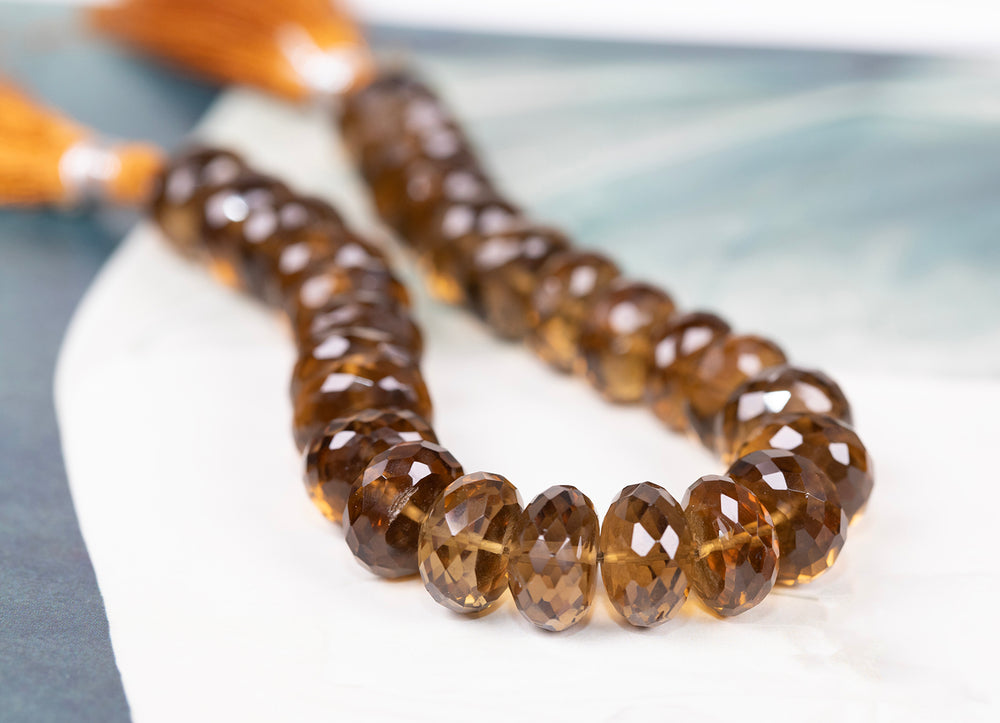
Cut follows the stone
Much of this collection is faceted by hand, one bead cut to its own stone. That is where the irregular rondelles in sapphire and ruby come from, and the graduated runs that step from 2mm to 6mm along a single strand. The shapes reach well past rounds: faceted teeth in lapis and green amethyst, twisted drops and pinwheels in black spinel, sapphire finished as top-drill slices, ruby carved into graduated ovals, Herkimer and Pakimer quartz drilled as natural points. Sizes read as ranges because a hand-cut lot varies bead to bead, and the range on the label is the range on the strand.
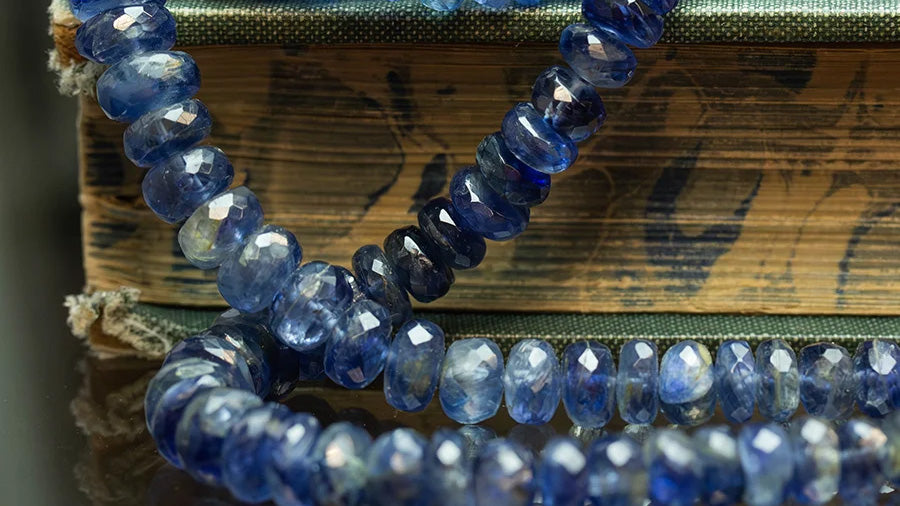
Strung with the finished piece in mind
Part of the design work is already on the strand. A collar or a graduated necklace arrives sized, sequenced, and balanced — the matching is done, so your time goes to the clasp, the metal, and the details that make the piece yours. A design length carries just what one pair of earrings or one pendant needs, which makes a piece simple to cost and keeps your bench stock lean. A one-of-a-kind strand or a single focal gives you a centerpiece to build the whole piece around — what it becomes is one of one, and that is the story your client takes home.
Frequently asked questions
-
What makes a strand belong in this selection?
Strands land here when they show stronger clarity, more saturated or even color, cleaner matrix, tighter calibration, or come from a source that's harder to keep in stock. The selection skews toward material designers reach for when a single strand has to carry a finished piece — faceted Sapphire and Ruby rondelles, natural Turquoise from named mines, Ethiopian and Australian Opal, well-cut Moonstone and Labradorite. The label is descriptive, not a tier label: it groups strands by what's in the bag, not by a price bracket. Specifics on each strand — origin, cut, treatment — should be disclosed; ask before buying if anything you need isn't specified. -
Which stones show up most in this collection?
Turquoise leads by a wide margin, followed by Opal, Sapphire, Quartz, and Ruby, with steady inventory of Moonstone, Labradorite, Tourmaline, Amethyst, and Kyanite. Cut distribution leans toward rondelles, rounds, teardrops, and pebble/nugget shapes, with faceted rondelles common across the corundum and Tourmaline strands and heishi/tyre cuts frequent on Turquoise. Sizes cluster in the 3–8mm range, with 6mm and 8mm the most common. If you're sourcing for a specific palette or cut, the side filters narrow the grid by stone, shape, and size — or pull the dedicated stone collection (for example Turquoise or Sapphire) for the full run. -
Are these strands graded for clarity, calibration, or origin?
Grading varies by material. Faceted corundum (Sapphire, Ruby) and faceted Tourmaline strands typically carry clarity and color notes. Turquoise is generally identified by mine or region when that information is available from the supplier. Calibration tolerance depends on cut: faceted rondelles and rounds run tighter than nuggets, slices, or free-form shapes, which are sold as natural cuts and will vary strand to strand. Bead count, strand length, and drill size should appear on each listing. If a grading detail you need for a design isn't listed, ask before ordering — supplier paperwork doesn't always make it into the listing automatically. -
How is this different from the standard catalog?
The standard catalog covers the full range of Dakota's gemstone strands at working price points for production and repeatable designs. This selection pulls the strands within that catalog where the material itself is doing more of the work — better color, cleaner cut, scarcer origin, or a stone that doesn't run as a steady SKU. Many of the same stones appear in both places at different grades; for example, you'll find Turquoise rounds in the main Turquoise collection and also here when a specific lot warrants it. Use this view when the piece you're building needs the strand to stand on its own. -
How is treatment handled on higher-grade material?
Treatment is material-specific and should be noted. Common cases: most Turquoise on the market is stabilized — natural, untreated Turquoise is called out specifically when applicable. Ruby and Sapphire are commonly heat-treated; lead-glass-filled corundum is a separate category and labeled when present. Opal is generally untreated but can be backed or doublet-cut; that's noted by cut type. Amethyst, Citrine, and some Quartz varieties may be heat-treated or irradiated. If treatment status matters for your client disclosure and isn't on the listing, ask before buying — Dakota will check supplier records before the strand ships.